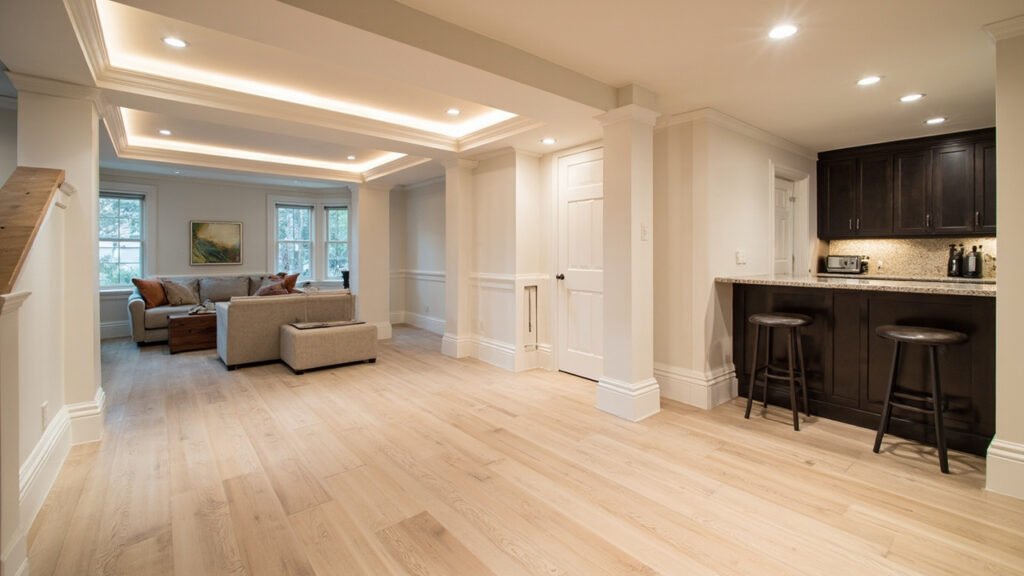
Adding a wet bar to your basement is one of the most rewarding upgrades you can make to your Greater Boston home. Whether you envision a sleek entertainment space for game nights, a stylish spot for hosting friends, or a convenient setup for family gatherings, a basement wet bar transforms underutilized square footage into the heart of your home. Basement Finishing of Boston specializes in wet bar installations throughout Greater Boston, including Needham, Newton, Lexington, Wellesley, Brookline, and surrounding communities.
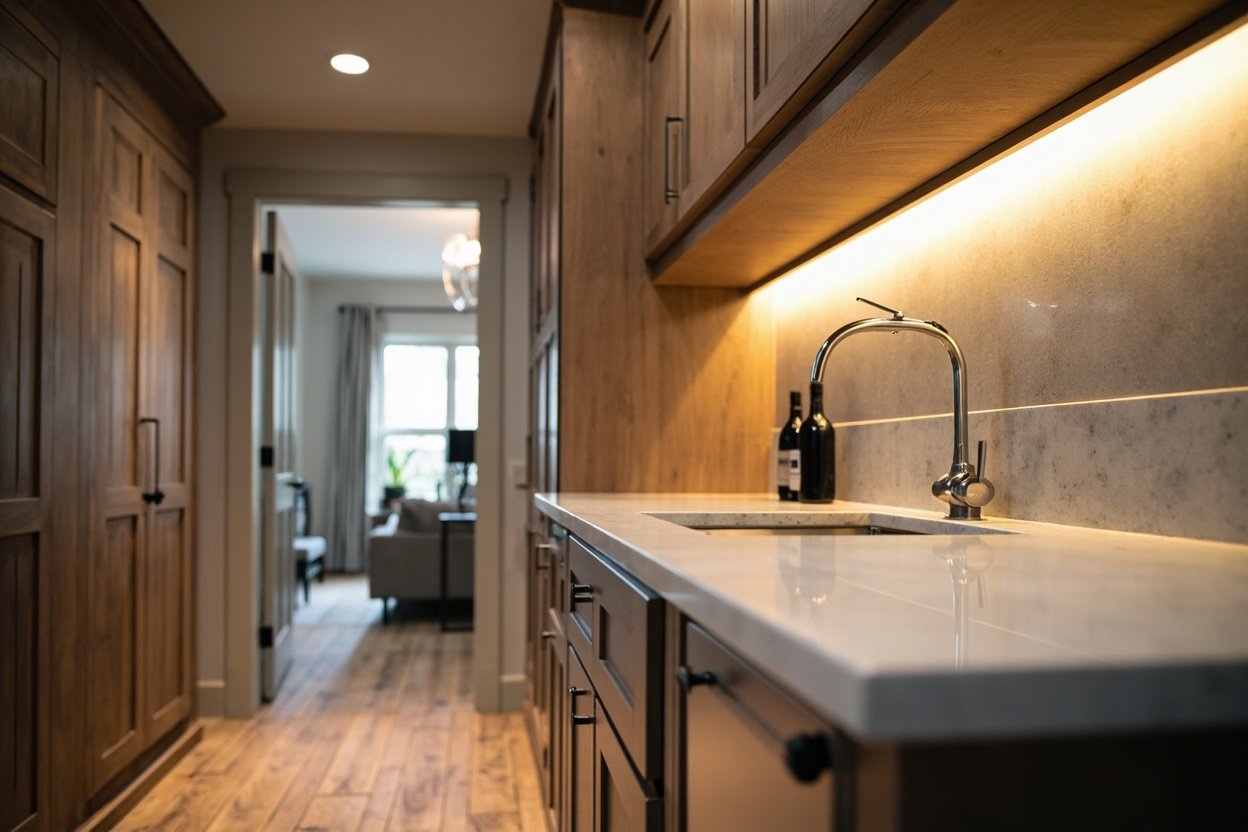
Why Homeowners Are Choosing Basement Wet Bars
Greater Boston homes often feature older basements that were built for storage rather than living. A wet bar installation gives you a functional gathering space without the cost of a full kitchen addition. You get beverage preparation capabilities, storage for glasses and supplies, and a focal point that elevates your entire basement. Many homeowners discover that their wet bar becomes the most-used feature in their finished basement.
Planning Your Basement Wet Bar: Key Considerations
Before installation begins, thoughtful planning ensures your wet bar meets your lifestyle needs. Consider these important factors:
- Location within your basement — Positioning your wet bar near an exterior wall often simplifies plumbing connections and ventilation
- Traffic flow — Your wet bar should be accessible but not blocking other basement functions
- Storage needs — Cabinetry, wine racks, and under-counter refrigerators all require dedicated space
- Sink versus no-sink — A sink adds functionality but requires plumbing access
- Backsplash and countertop materials — Choose moisture-resistant options designed for below-grade installation
Moisture Management: Essential for Boston Basements
Greater Boston’s climate presents unique challenges for basement finishing. Older homes in Newton, Lexington, and Brookline often have foundations that weren’t designed with modern moisture barriers. Your wet bar installation must account for these conditions to ensure long-term performance.
Basement Finishing of Boston addresses moisture concerns through several approaches:
- Professional moisture testing before any finishing work begins
- Interior drainage solutions if needed for your specific foundation
- Moisture-resistant materials throughout the wet bar buildout
- Proper ventilation planning to prevent condensation issues
- Sealed cabinetry designed for humid environments
This moisture-aware approach protects your investment and prevents the mold and mildew issues that plague improperly finished basement spaces.
Plumbing and Electrical Requirements
A functional wet bar requires professional plumbing and electrical work. Our team includes licensed plumbers and electricians who handle these critical aspects of your installation. You’ll need:
- Water supply lines — Hot and cold water connections for your sink
- Drain connections — Proper slope and venting for code compliance
- GFCI electrical outlets — Required near water sources for safety
- Task lighting — Under-cabinet lighting for functionality and ambiance
- Optional features — Wine coolers, ice makers, or under-counter appliances
Our licensed electricians and plumbers ensure all work meets Greater Boston building codes, giving you peace of mind that your wet bar is built correctly.
Design Options for Your Greater Boston Home
Every basement presents unique constraints, particularly in older Colonial homes across Wellesley, Weston, and Westwood where ceiling heights and foundation layouts vary widely. We work with these realities to create wet bars that maximize your space while meeting code requirements.
Popular wet bar configurations include:
- Linear layouts — Ideal for narrow basements or along foundation walls
- L-shaped designs — Maximize corner spaces with multiple workstations
- Island installations — Create a central gathering point in larger basements
- Kitchenette combinations — Pair your wet bar with a small kitchenette for full functionality
Countertop materials range from quartz and granite to more budget-friendly solid surface options. We recommend materials rated for below-grade use to withstand potential moisture exposure.
The Installation Process: What to Expect
Basement Finishing of Boston brings professional standards to every wet bar project. Our process includes thorough preparation, clear communication, and meticulous attention to detail.
- Initial consultation — We discuss your vision, assess your basement conditions, and identify any moisture or structural concerns
- Detailed scope — You receive a clear project outline covering all aspects of the installation
- Permit coordination — We handle necessary permits and inspections for plumbing and electrical work
- Professional installation — Framers, plumbers, electricians, and finish carpenters work in coordinated sequence
- Final walkthrough — We review your completed wet bar together, ensuring everything meets your expectations
Throughout the process, our team maintains clean work areas and provides clear updates on progress.
Making the Most of Your Wet Bar Investment
A basement wet bar installation pairs naturally with other basement finishing projects. Many homeowners combine their wet bar with a home theater, family room, or in-law suite to create a complete entertainment level. This approach is particularly popular in homes where space is at a premium but the desire for functional living areas is high.
When planning your wet bar, consider how it will integrate with adjacent spaces. Your Basement Finishing of Boston team can design cohesive transitions between your wet bar area and surrounding rooms, creating a finished basement that flows naturally and feels like a natural extension of your home.
Ready to transform your basement? Visit our basement finishing page or call (857) 666-8643 for a Free, no-obligation estimate
When planning your basement wet bar installation, focus on proper scope definition, moisture management, and selecting materials suited for below-grade spaces.