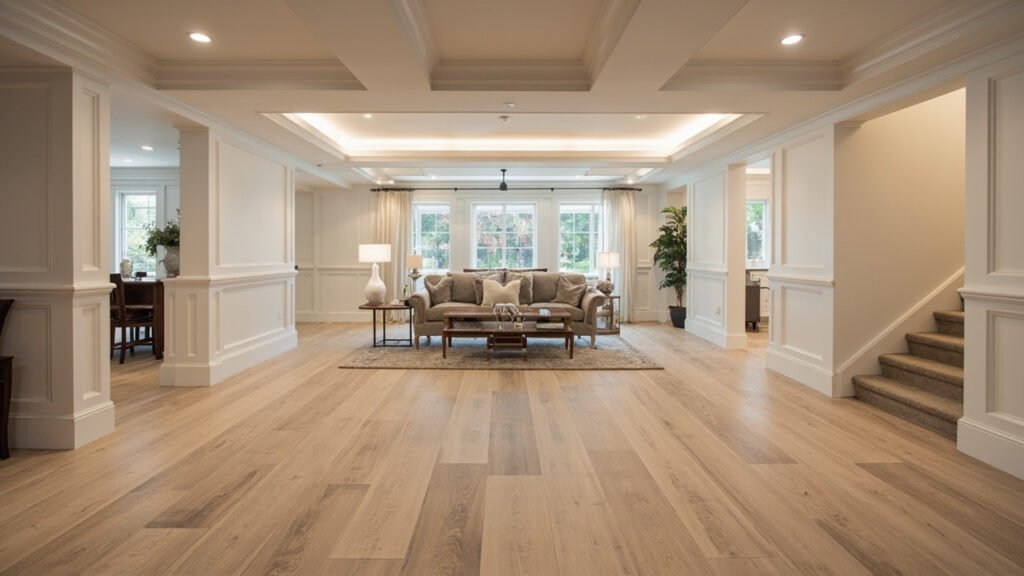
Thinking about creating a basement playroom for your family? You’re not alone. Many homeowners in Greater Boston are discovering that their below-grade spaces offer the perfect canvas for a dedicated kids’ play area. Whether you have curious toddlers, active tweens, or teens who need their own hangout zone, a finished basement playroom gives your family valuable square footage without the cost of a home addition.
Why Basements Make Perfect Playrooms in Boston-Area Homes
Boston-area homes, from historic Colonials in Lexington to split-levels in Newton and Victorian brownstones in Brookline, often have basements that go underutilized. Converting this space into a playroom offers several advantages for local families:
- Keeps toy clutter contained—away from living areas and dining spaces
- Provides a safe, supervised environment for kids to play independently
- Adds real value to your home while solving family storage challenges
- Creates noise containment—a basement playroom means less sound echoing through the main floors
- Offers flexibility as your children’s needs change over the years
Planning Your Basement Playroom: Key Considerations for Boston Homes
Before diving into design ideas, every Greater Boston basement renovation needs careful planning. Our climate and housing stock present unique challenges that experienced local contractors understand intimately.
Moisture Management: The Foundation of a Healthy Playroom
Massachusetts basements face humidity challenges that inland areas don’t always experience. Before finishing your basement playroom, we assess several moisture-related factors:
- Water intrusion history—Does the basement have any past flooding or seepage issues?
- Grade and drainage—Is the exterior grading directing water away from your foundation?
- Humidity levels—Do condensation issues appear on pipes or walls during summer months?
- Ventilation patterns—How does air circulate through the space naturally?
For basement playrooms, we typically recommend waterproofing preparation, dehumidification systems, and moisture-resistant materials throughout the build. These steps protect your investment and create a healthier environment for your children.
Ceiling Height and Egress Requirements
Older Boston-area homes often have basements with lower ceiling heights—sometimes as low as 6’6″. Modern building codes typically require egress windows for basement bedrooms and living spaces, which means we may need to lower the floor or create window wells to bring your space up to code.
For playroom use specifically, you have more flexibility than a bedroom, but we still recommend exploring egress options to maximize natural light. A well-lit basement playroom feels larger and more inviting than a dark, cavernous space.
Zoning Ideas for a Multi-Use Basement Playroom
The best basement playroom designs create distinct zones that serve different purposes. Consider incorporating these areas based on your children’s ages and interests:
- Active play zone—Open floor space for building blocks, train sets, or dancing
- Creative corner—Art station with easy-clean flooring and good lighting for crafts
- Reading nook—Cozy seating area with built-in bookshelves
- Video gaming station—Designated area away from other activity zones
- Homework station—Proper desk lighting and storage for school supplies
Strategic framing during your basement renovation allows us to create natural separations between zones without closing off the space entirely. Glass partition walls, sliding barn doors, and partial height walls all offer visual separation while maintaining an open feel.
Lighting Solutions for Below-Grade Spaces
Basements present unique lighting challenges, but modern solutions make it easy to create bright, welcoming play spaces. A layered approach works best:
- Ambient lighting—LED recessed lights or flush-mount fixtures provide overall illumination
- Task lighting—Adjustable pendant lights over craft areas or desk lamps for homework zones
- Accent lighting—LED strip lighting along soffits or behind built-ins adds visual interest
- Natural light additions—Egress windows, window wells, or light wells bring in daylight where possible
We work with licensed electricians throughout the Greater Boston area to ensure your lighting installation meets code and provides the illumination your family needs.
Finishing Touches That Make Your Playroom Special
Once the framing, insulation, and drywall are complete, the fun details transform your basement into a true playroom:
- Durable flooring—Luxury vinyl plank (LVP) offers water resistance, easy cleaning, and endless design options. Many homeowners choose wood-look LVP for warmth without the moisture concerns of hardwood.
- Wall finishes—Bright, washable paint colors make the space feel cheerful while standing up to sticky fingers and accidental marker encounters
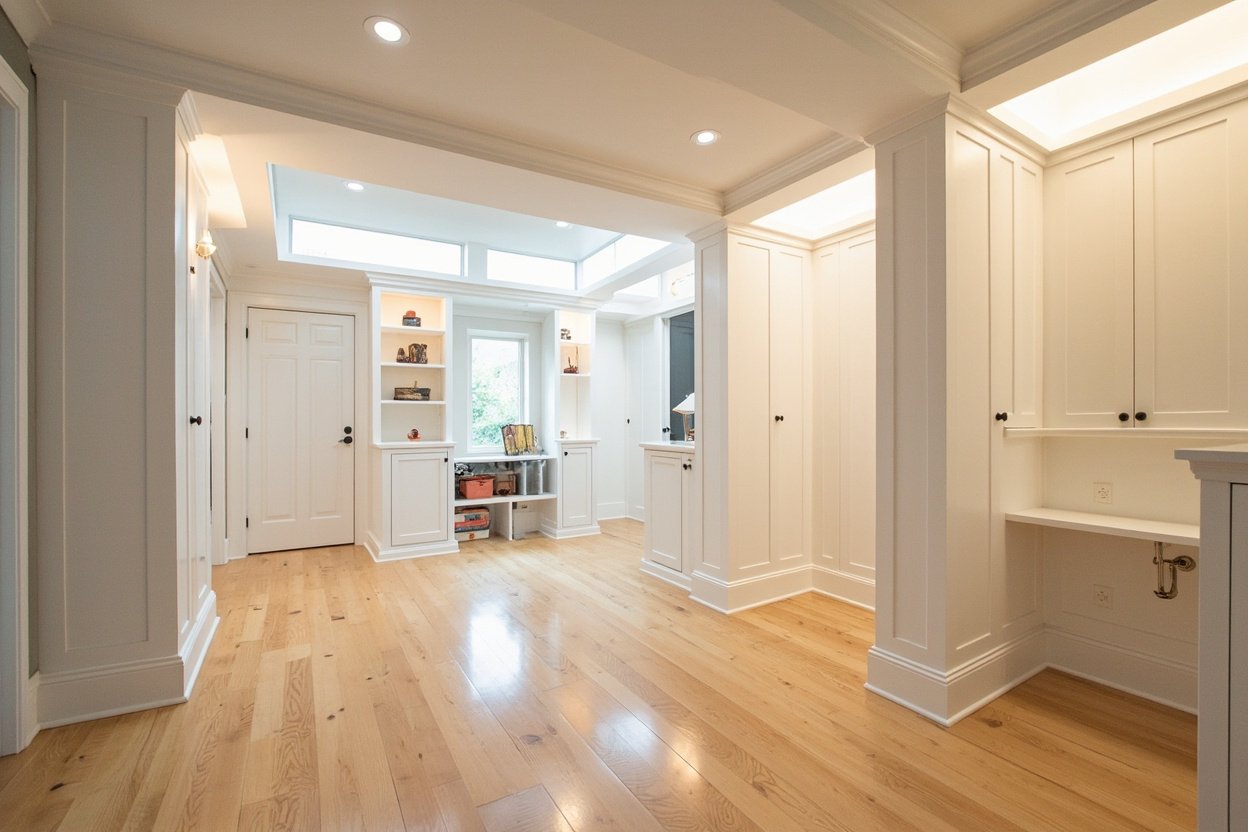
- Creative storage—Built-in cubbies, custom closet systems, and shelving keep toys organized and accessible
- Acoustic considerations—Carpet tiles, area rugs, and acoustic panels help manage the noise that active play generates
Planning Your Basement Playroom Project in Greater Boston
Every basement presents unique challenges and opportunities. A professional assessment helps you understand what’s possible in your specific space—whether you have a dry, full-height basement in Weston or a partially finished area in Quincy that needs updating.
During your consultation, we’ll discuss your family’s needs, budget considerations, and the scope of work required to transform your below-grade space into a functional playroom. Our process includes clear communication, organized job sites, and coordination with licensed plumbers and electricians for any required trade work.
Ready to transform your basement? Visit our basement finishing page or call (857) 666-8643 for a Free, no-obligation estimate
When planning your basement playroom ideas, focus on proper scope definition, moisture management, and selecting materials suited for below-grade spaces.