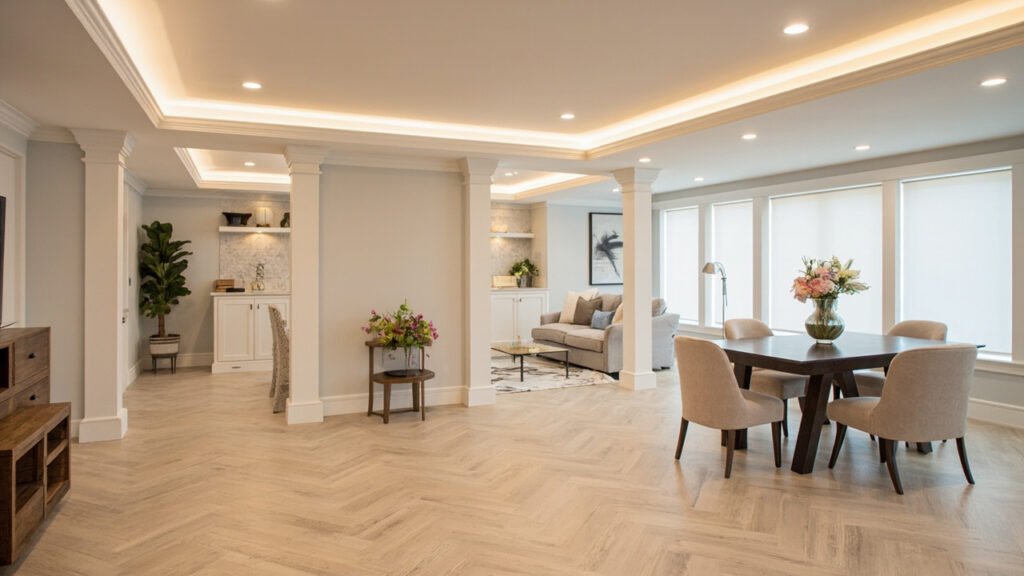
Your basement holds incredible potential. While many Greater Boston homeowners use these spaces for storage, a well-designed basement guest suite can add serious value to your home while giving your guests a private, comfortable place to stay. Whether you’re expecting visiting family members, friends, or need space for adult children between moves, a basement guest suite delivers functionality without sacrificing your main living areas.
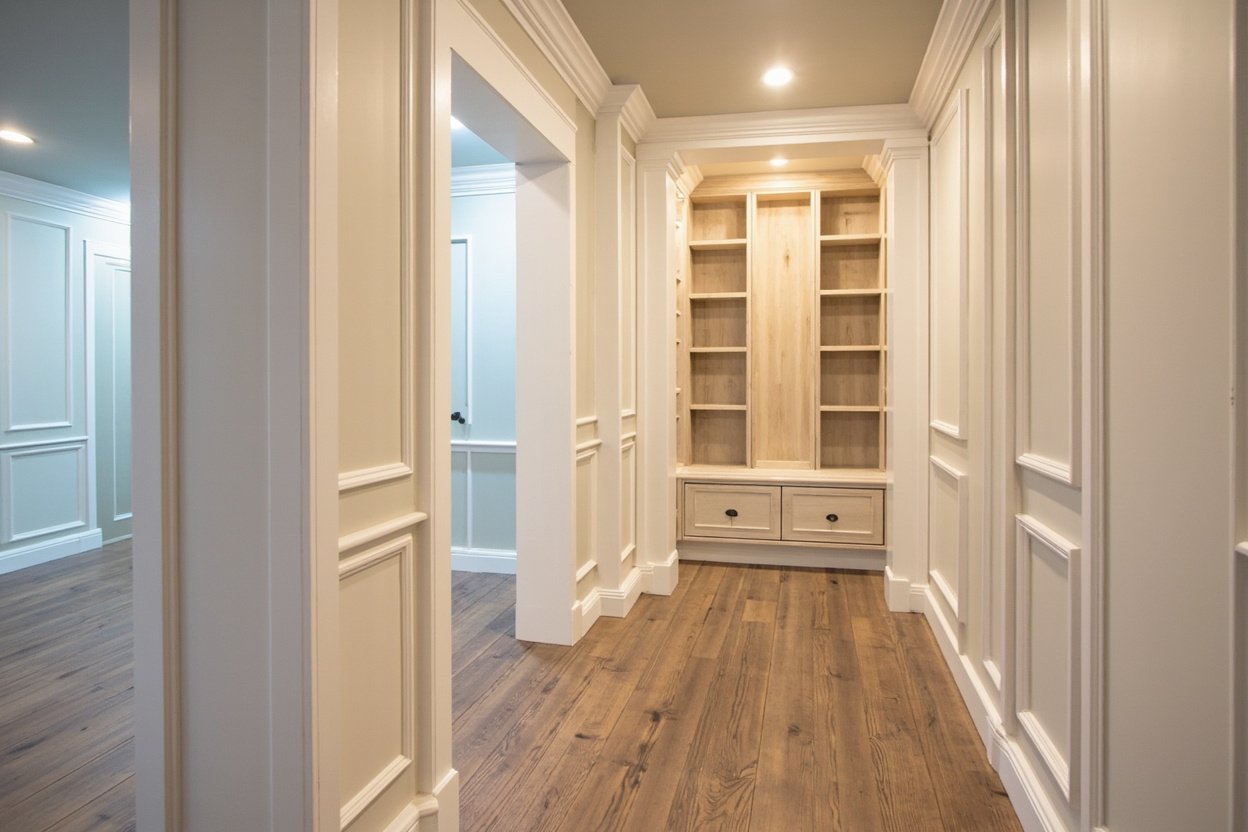
At Basement Finishing of Boston, we’ve helped homeowners throughout Needham, Newton, Lexington, Wellesley, and surrounding communities transform their below-grade spaces into beautiful, livable guest accommodations. Here’s what you need to know about designing a basement guest suite that works for your home.
Why Homeowners Choose Basement Guest Suites
Basement guest suites offer unique advantages over traditional guest rooms. They provide genuine privacy for visitors—complete with separate sleeping, bathing, and sometimes even kitchen facilities. This makes them ideal for guests who appreciate their own space, whether they’re visiting for a weekend or an extended stay.
For homeowners, the benefits extend beyond hospitality. A thoughtfully designed guest suite can:
- Increase your home’s usable square footage and market value
- Provide accommodation options for aging parents or adult children
- Create potential rental income opportunities
- Keep guest quarters separate from daily family life
Key Design Considerations for Boston Basements
Boston-area homes present specific challenges that require careful planning. Many houses in Newton, Brookline, Westwood, and historic neighborhoods were built with lower ceilings and unique structural elements. Before designing your guest suite, we evaluate several factors:
Ceiling Height Requirements
Most municipalities require a minimum ceiling height of 7 feet for habitable basement spaces. Some older homes in Lexington, Wellesley, and surrounding towns may need creative solutions like dropped ceilings with recess lighting or exposed ductwork to meet code while maintaining an open feel.
Moisture and Water Management
New England basements face moisture challenges that Southern or Western climates simply don’t encounter. Proper waterproofing, vapor barriers, and insulation are non-negotiable elements of any basement guest suite. We recommend:
- Interior drainage systems or sump pump installation
- Sealed vapor barriers on all exterior walls
- R-10 or higher rigid foam insulation
- Moisture-resistant drywall and finishes
- Proper ventilation strategies
Popular Guest Suite Layout Options
The best layout depends on your basement’s dimensions and your household’s needs. Here are layouts we frequently install for Greater Boston homeowners:
The Open Plan Guest Suite
Ideal for larger basements, this design combines sleeping and sitting areas into one open space with a separate bathroom. High ceilings and strategic lighting make the area feel spacious and welcoming.
The Suite with Kitchenette
Adding a wet bar or kitchenette allows guests to prepare simple meals without using your main kitchen. These installations include cabinetry, a mini-fridge, microwave, and sometimes a sink—everything needed for independent living.
The Private Retreat
For families with multiple guests or longer stays, we create dedicated zones: a bedroom with closet space, a full bathroom, a sitting area, and a small kitchenette. This approach maximizes privacy and functionality.
Building Your Guest Suite: The Process
Our team handles every phase of your basement guest suite project with the same attention to detail we bring to all our finishing work:
- Initial consultation: We assess your basement’s current condition, discuss your vision, and explain what’s feasible given your space and budget.
- Design and planning: We create detailed plans addressing layout, electrical, plumbing, and finishes.
- Permit navigation: We handle required permits in your town, whether you’re in Quincy, Braintree, or Natick.
- Construction: Our crews manage demo, framing, insulation, drywall, flooring, and finishing work.
- Trade coordination: Licensed electricians and plumbers handle all utility connections safely.
Must-Have Features for Guest Comfort
Certain elements elevate a basement guest suite from basic to exceptional. Based on what our clients request most often, we recommend including:
- Egress windows: Required by code for bedrooms and provides natural light and emergency exit
- Independent climate control: A dedicated thermostat or portable heating/cooling unit
- Quality lighting: Combination of ambient, task, and accent lighting
- Soundproofing: Insulation in walls and floors reduces noise transfer
- Proper closet space: Built-in or freestanding storage solutions
- Basement bathroom: Full bath with shower, or half bath for kitchenette suites
Meeting Code Requirements in Greater Boston
Every town we serve has specific building codes for basement conversions. Egress windows are mandatory for any bedroom in a basement guest suite. Bathroom installations require proper venting and permits. Electrical work must meet current codes, including AFCI protection in bedrooms.
Our team knows the requirements for each community we serve—from Acton to Weston, Wayland to Burlington. We handle all permitting and inspections, so you don’t have to navigate the process alone.
Getting Started on Your Guest Suite
Your basement guest suite starts with a conversation. We visit your home, assess your space, and discuss how to make your vision work within your budget. From there, we provide detailed proposals with clear scope and honest pricing.
The best part? We maintain clean job sites, communicate throughout the project, and treat your home with respect. That’s how we’ve built our reputation serving Greater Boston homeowners for basement finishing projects of every size.
Ready to transform your basement? Visit our basement finishing page or call (857) 666-8643 for a Free, no-obligation estimate
When planning your basement guest suite designs, focus on proper scope definition, moisture management, and selecting materials suited for below-grade spaces.