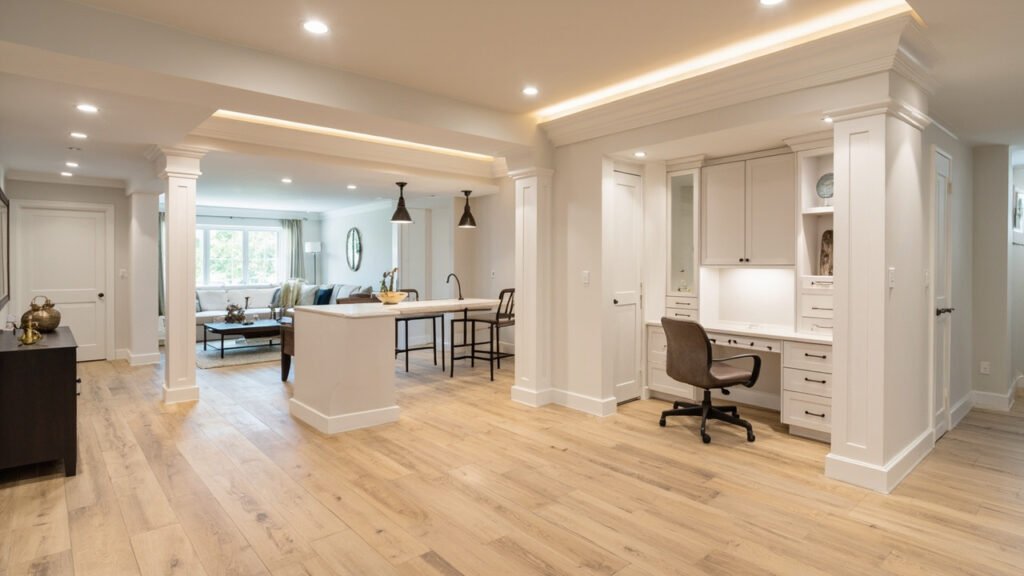
Finishing a basement in the Boston area comes with unique challenges that differ significantly from above-ground renovation projects. Whether you are converting an unused space in a historic Newton colonial or opening up a finished area in a newer Needham home, understanding the specific considerations for below-grade construction in Greater Boston can save you time, money, and frustration down the road.
Why Basement Finishing Requires Special Expertise in Greater Boston
Boston-area homes represent a remarkable diversity of construction styles, from Federal-period farmhouses in Lexington to mid-century ranches in Quincy and Victorian twins in Brookline. This architectural variety means that every basement finishing project presents its own set of variables. Foundation materials vary widely—fieldstone foundations in older Westwood homes behave differently than poured concrete in newer construction, and brick foundations common in Wellesley and Weston properties require specific approaches to moisture management.
A basement finishing contractor familiar with Greater Boston understands how regional climate patterns affect below-grade spaces. New England winters bring freeze-thaw cycles that stress foundations, while humid summers can create moisture challenges that less experienced contractors might overlook. Our team approaches every basement project with moisture awareness as a foundational principle, not an afterthought.
Key Considerations for Boston Basement Projects
Before beginning your basement finishing journey, several factors deserve careful attention:
- Ceiling height requirements: Many Boston-area basements were built with lower ceilings than modern building codes recommend. If your ceiling height is under seven feet, you may need to lower the floor or work with a contractor who can address this creatively while maintaining code compliance.
- Moisture and water management: Even homes without visible water issues can have moisture vapor transmission through foundation walls. Proper insulation, vapor barriers, and potentially sump pump installation protect your investment from mold and structural damage.
- Egress requirements: If your basement will serve as a guest suite, in-law apartment, or sleeping area, building codes require proper egress—typically a door or window that meets specific size requirements for emergency exit. This is especially important in communities like Acton, Natick, and Wayland where basement apartments are increasingly common.
- Existing mechanical systems: Older homes in Lexington, Bedford, and Burlington often have older heating systems, water heaters, and electrical panels that may need relocation or upgrading before finishing can begin.
What Does a Typical Basement Finishing Project Include?
Every basement finishing project in Greater Boston starts with a thorough assessment of your existing space and goals. From there, a comprehensive scope typically includes:
- Selective demo and removal of existing finishes
- Framing walls and soffits to accommodate mechanical systems
- Insulation installation meeting current energy codes
- Drywall hanging, taping, and finishing
- Interior flooring options including luxury vinyl plank (LVP), tile, or engineered hardwood
- Interior painting with moisture-resistant products
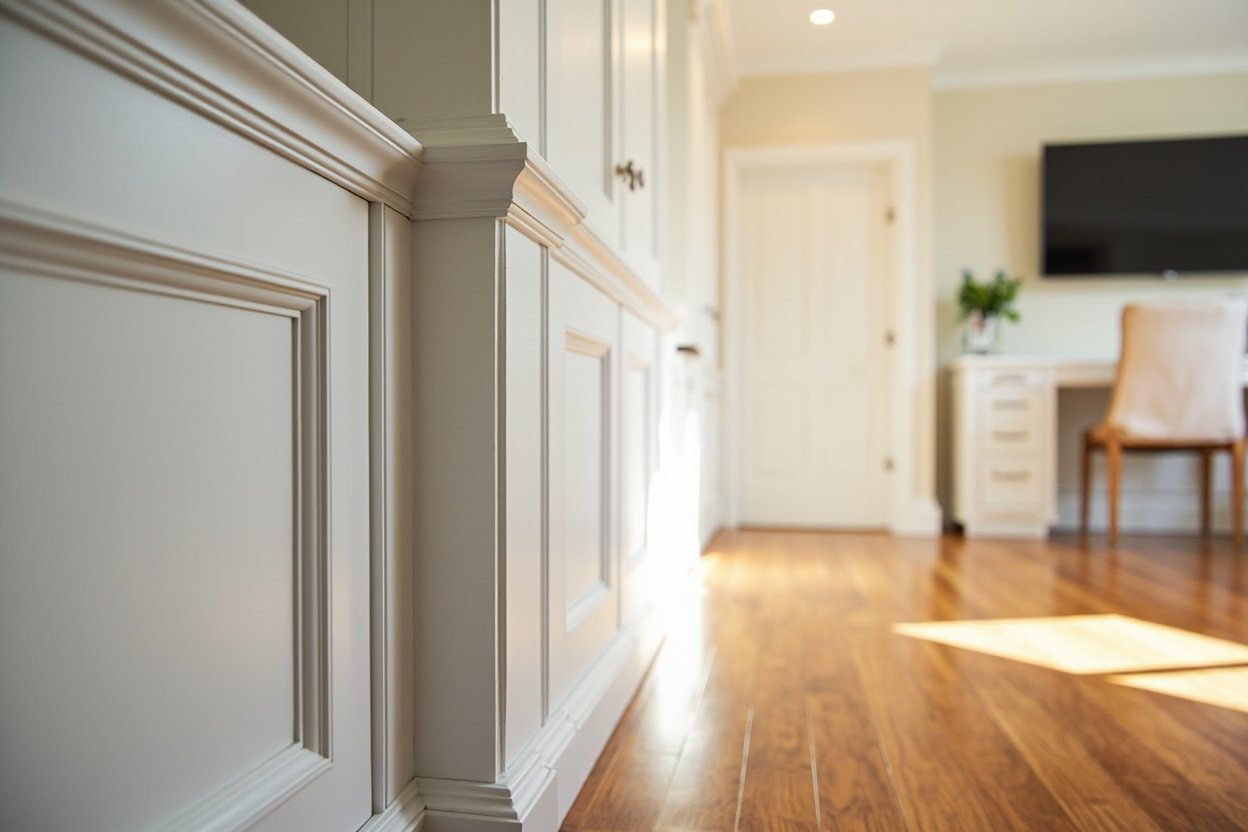
- Trim and baseboard installation
- Ceiling solutions—dropped ceilings for accessibility or clean drywall for a polished look
- Lighting installation throughout
- Final inspections and punch list completion
Popular Basement Finishing Configurations for Boston Homes
Greater Boston homeowners pursue basement finishing for diverse reasons. Understanding which configuration aligns with your lifestyle helps create a space that genuinely enhances your home:
- Family entertainment rooms: Open-concept spaces with comfortable seating, media systems, and durable flooring handle heavy use from kids and adults alike.
- Home offices: With remote work becoming permanent for many Boston-area professionals, a dedicated basement office provides privacy, temperature control, and separation from household activity.
- Home gyms: Basement gyms capitalize on cool temperatures and sound-dampening concrete walls while keeping workout equipment out of living areas.
- In-law suites and guest areas: As families seek multigenerational living solutions, basement suites with bedroom, bathroom, and kitchenette facilities serve aging parents or adult children gracefully.
- Home theaters: Below-grade spaces naturally lend themselves to media rooms, where concrete walls provide excellent acoustics and temperature stability.
Moisture Management: The Foundation of Durable Basement Finishing
Moisture remains the single greatest threat to basement finishing projects in Greater Boston. Unlike above-ground rooms where humidity control is straightforward, basements require proactive strategies:
Our approach begins with comprehensive moisture assessment. We evaluate foundation walls for cracks and water intrusion, check grading and drainage around the home’s exterior, and test baseline humidity levels before any work begins. During construction, we specify appropriate insulation products—typically closed-cell spray foam or rigid foam board—applied directly to foundation walls to create a thermal break that prevents condensation.
Proper ventilation strategy matters significantly. Many Boston homeowners assume that sealing a basement completely prevents moisture problems, but balanced mechanical ventilation often provides better long-term results than passive approaches. We work with licensed HVAC specialists when projects require dedicated ventilation systems.
Working with a Basement Specialist in Greater Boston
Choosing a contractor who specializes exclusively in basement finishing offers meaningful advantages for Boston-area homeowners. Unlike general contractors who approach basements as just another room, basement specialists understand the unique technical requirements that make below-grade projects succeed or fail.
At Basement Finishing of Boston, our team maintains organized job sites, clear communication throughout the project, and strict attention to detail on every phase—from initial framing through final trim installation. We coordinate licensed electricians and plumbers for any required trade work, ensuring that basement bathroom buildouts, wet bar installations, and egress window additions meet all applicable codes in your specific municipality.
Our familiarity with local building departments across Needham, Newton, Wellesley, Brookline, and surrounding communities means we understand exactly what inspectors look for in basement finishing projects. This experience helps projects proceed smoothly without unexpected delays or costly revisions.
Getting Started with Your Boston Basement Project
If your basement currently serves only as storage or remains completely unfinished, you are sitting on significant untapped potential. The space beneath your feet could become the most valuable square footage in your home—a place where family gathers, guests stay comfortable, and daily life unfolds in new and meaningful ways.
Ready to transform your basement? Visit our basement finishing page or call (857) 666-8643 for a Free, no-obligation estimate
When planning your basement finishing boston, focus on proper scope definition, moisture management, and selecting materials suited for below-grade spaces.