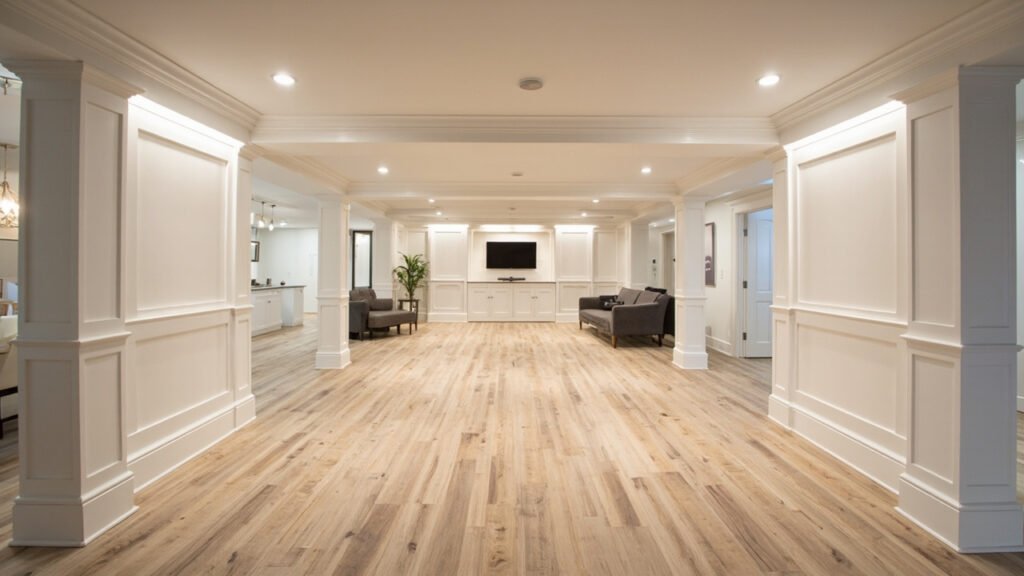
More Greater Boston homeowners are discovering the benefits of moving their workout routine downstairs. A basement home gym offers convenience, privacy, and the ability to work out regardless of weather or time of day. However, finishing a basement for a home gym requires more than just clearing out storage and rolling out a yoga mat. It demands careful planning, moisture management, and someone who understands the unique challenges of below-grade construction in our region.
Common Challenges When Converting a Basement into a Home Gym
Before you start browsing elliptical machines and rubber flooring samples, consider the existing conditions of your basement. Older homes in Newton, Lexington, and Brookline often have basements with moisture issues, low ceiling heights, and limited natural light. These are not dealbreakers, but they do require professional attention during the finishing process.
Some challenges our team encounters regularly include:
- Moisture seeping through foundation walls during humid summers
- Ceiling heights that feel cramped once walls are framed and finished
- Outdated electrical systems unable to handle gym equipment loads
- Poor ventilation leading to stale, damp air
- Hard flooring surfaces that can damage equipment and feel uncomfortable
How a Basement Specialist Approaches Your Home Gym Project
Working with a basement home gym contractor means your project gets evaluated through the lens of below-grade construction. We do not treat your basement like a standard room addition. Instead, we assess moisture pathways, insulation requirements, and structural considerations unique to the space.
Our process typically includes a thorough inspection of your foundation walls and floor, evaluation of existing drainage around your home, and discussion of your equipment plans. Heavy gym equipment requires proper floor reinforcement and sometimes subfloor modifications. We coordinate with licensed electricians to ensure your circuits can handle multiple machines running simultaneously, and we plan ventilation improvements to keep air circulating properly.
Essential Elements of a Finished Basement Gym
When we finish a basement for a home gym, several elements come together to create a functional, comfortable space:
- Moisture barrier systems that prevent water vapor from migrating through concrete walls and floors
- Proper insulation using materials rated for below-grade applications to maintain comfortable temperatures year-round
- Subfloor solutions that provide cushioning for equipment and protect against cold concrete
- Lighting upgrades including bright, energy-efficient fixtures that illuminate the space without glare
- Dedicated electrical circuits for treadmills, ellipticals, and other equipment
- Ventilation improvements to manage humidity and keep air fresh during intense workouts
Navigating Boston-Area Building Considerations
Homes in Greater Boston present specific finishing challenges that generic contractors may overlook. Many homes in Wellesley, Weston, and Westwood were built in the early-to-mid 20th century with basements designed for storage rather than living space. This means ceiling joists may sit lower than modern code recommends, and foundation walls may have been constructed with materials that require special handling.
If your basement ceiling height falls below current code requirements for habitable space, we can discuss options like dropping the floor slightly or using recessed lighting to maximize vertical space. We also understand Massachusetts egress requirements for basements used as sleeping rooms, which may influence how we plan your layout if your gym also serves as a guest area.
Local building departments in communities like Needham, Natick, and Quincy have specific permit requirements for basement finishing projects. Our team manages the permit process and ensures all work meets local codes and inspections.
Customizing Your Space for Your Fitness Goals
A home gym basement should reflect your specific workout preferences and equipment needs. Some homeowners in Burlington and Acton prefer open layouts with rubberized flooring throughout, while others want dedicated zones for weights, cardio, and stretching. We work with you to understand your equipment inventory, workout style, and how you envision using the space.
Consider adding features that enhance your gym experience:
- Wall-mounted mirrors for form checking during weight training
- Rubberized flooring tiles or rolled flooring for equipment zones
- Bluetooth-enabled lighting for ambiance control
- A small changing area or bathroom for post-workout convenience
- Climate control options like supplemental heating or dehumidification
Making the Investment Work for Your Home
A finished basement gym adds usable square footage to your home, which appeals to future buyers and improves your current quality of life. By working with a basement specialist, you avoid the shortcuts that lead to moisture problems, insulation failures, and premature renovations.
We recommend scheduling an initial consultation to discuss your goals and assess your basement’s current conditions. Every home is different, and understanding your specific situation helps us provide accurate recommendations without assumptions.
Ready to transform your basement? Visit our basement finishing page or call (857) 666-8643 for a Free, no-obligation estimate
When planning your basement home gym contractor, focus on proper scope definition, moisture management, and selecting materials suited for below-grade spaces.