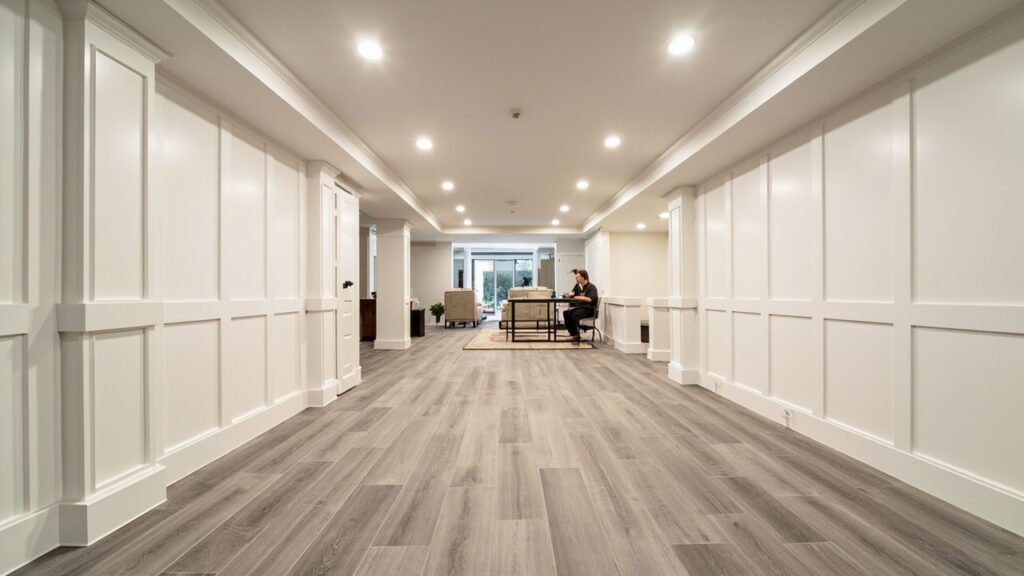
With remote and hybrid work becoming the new normal, Greater Boston homeowners are increasingly looking at their basements as untapped potential for creating dedicated home offices. A well-designed basement home office can give you the privacy, focus, and professional environment you need—without sacrificing square footage elsewhere in your home. If you live in an older home in Newton, Lexington, or Brookline, your basement might be the perfect canvas for your dream workspace. Here are some practical basement home office ideas to help you plan your project.
Why Basements Make Great Home Offices
Basements offer natural separation from the main living areas of your home, which means fewer distractions and better work-life boundaries. When you finish your basement with a home office in mind, you gain a dedicated professional space that feels separate from your personal life—something that becomes invaluable when your living room doubles as your workspace. Boston-area homes, many of which were built in the early-to-mid 20th century, often have deep lots and generous basement footprints that are perfect for converting into functional offices.
Beyond the practical benefits, a basement office can also add significant value to your home. Finished basements with thoughtful layouts appeal to future buyers who may also work from home, making your investment in basement finishing a smart long-term decision for properties in Wellesley, Weston, Wayland, and throughout the Greater Boston area.
Planning Considerations for Your Basement Home Office
Before diving into design ideas, there are several important factors to address when planning a basement home office in a Boston-area home:
- Ceiling height: Many older Boston-area homes have basements with limited ceiling clearance. Building codes typically require a minimum of 7 feet of headroom, but 8 feet or more creates a much more comfortable workspace. Your finishing plan should account for framing, insulation, and ceiling solutions that maximize vertical space.
- Moisture management: Below-grade spaces are naturally prone to moisture issues. Proper moisture barriers, adequate ventilation, and strategic insulation placement are essential for creating a healthy office environment that protects your electronics, furniture, and documents.
- Egress requirements: If your basement will serve as a primary workspace, building codes may require an egress window or alternate exit. This is particularly important if you plan to use the space for extended hours. Your contractor can advise on egress window installation that meets local codes in Bedford, Burlington, Quincy, and surrounding communities.
- Electrical and data infrastrong> A home office needs robust electrical service, dedicated circuits for computers and equipment, and reliable internet connectivity. Our team includes licensed electricians who can ensure your basement office has the power infrastructure it needs.
Design Layout Ideas for Your Basement Office
When considering basement home office ideas, think about how you’ll actually use the space day-to-day. Here are some layout approaches that work well in below-grade environments:
- The focused workspace: Position your desk to face a wall rather than the back of the room, which creates a sense of direction and focus. If possible, place the desk near a window or egress opening for natural light access.
- Zones for different activities: Consider dividing your basement office into zones—a primary work area, a reading or thinking corner, and perhaps a small meeting space if you frequently have video calls or client meetings.
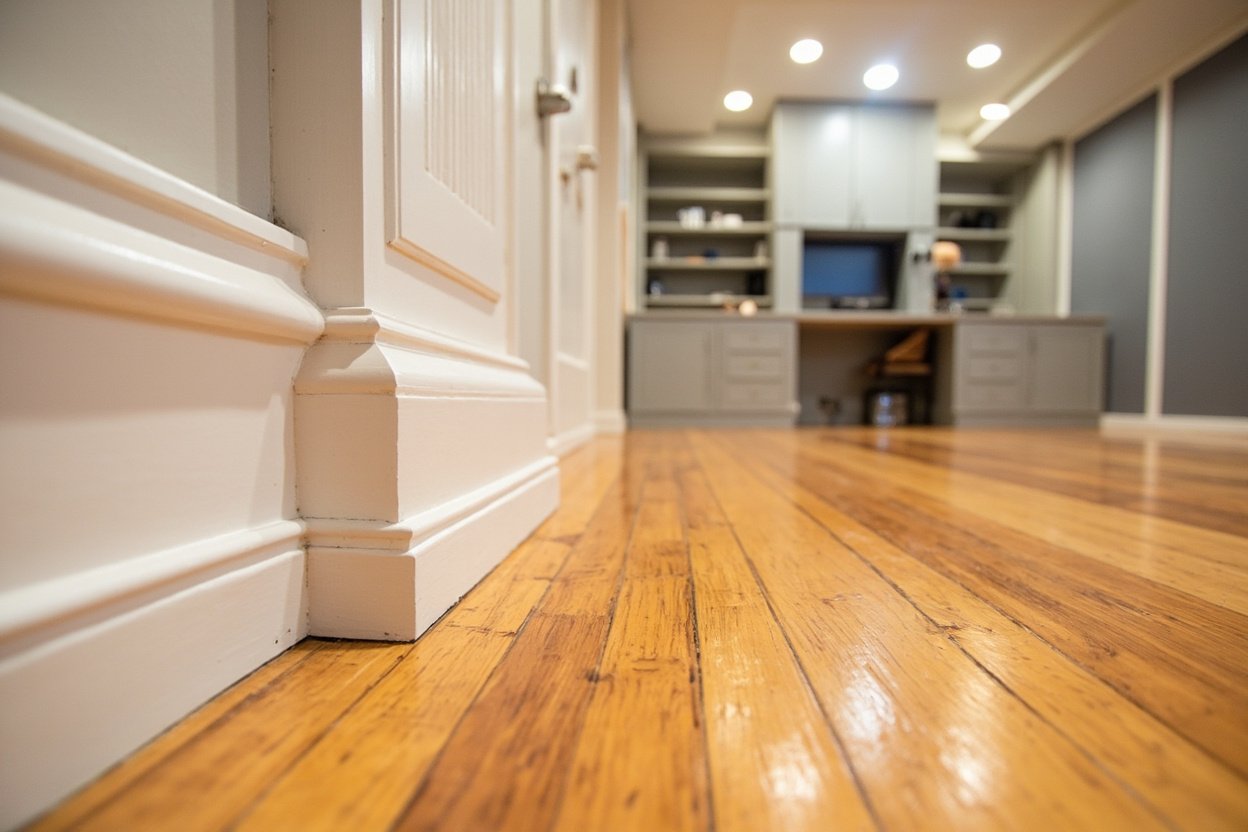
- Storage solutions: Built-in shelving and cabinetry can maximize wall space while keeping your office organized. Custom millwork designed for your specific needs ensures every inch of your basement office works for you.
- The L-shaped desk arrangement: Corner setups work exceptionally well in basements, taking advantage of structural walls while creating an expansive work surface.
Lighting Your Below-Grade Workspace
One of the most common concerns about basement offices is lighting. Without large windows, basements require thoughtful artificial lighting strategies to create a productive atmosphere. Layer your lighting approach with ambient, task, and accent lighting. Recessed LED fixtures provide excellent general illumination, while adjustable task lighting at your desk reduces eye strain during long work sessions. Consider smart lighting systems that allow you to adjust color temperature throughout the day—cooler tones in the morning to boost alertness and warmer hues in the afternoon for a comfortable transition into evening.
Egress windows can be expanded or supplemented with window wells to maximize natural light penetration. Even a modest amount of daylight can significantly improve your mood and productivity while reducing energy costs during daylight hours.
Climate Control and Comfort
A comfortable workspace requires consistent temperature and humidity control. Basements naturally stay cooler in summer but can feel cold in winter without proper insulation. Our basement finishing process includes comprehensive insulation solutions that help regulate temperature year-round. Consider installing a dedicated heating zone for your basement office so you can maintain your ideal working temperature independent of the rest of your home.
Proper moisture control is equally important. In addition to structural moisture barriers, a dehumidifier sized appropriately for your space helps protect equipment and creates a more comfortable environment. Your contractor can recommend the right capacity based on your basement’s square footage and typical humidity levels.
The Professional Finishing Process
Transforming your basement into a home office is a significant project that benefits from working with experienced professionals who understand below-grade construction. Our team at Basement Finishing of Boston brings Sun Shore Construction’s proven standards to every project, ensuring:
- A clear scope and detailed planning process before any work begins
- Clean, organized job sites throughout construction
- Strong communication with regular updates on progress
- Quality craftsmanship in framing, insulation, drywall, flooring, and finishing work
- Licensed tradespeople for electrical and plumbing needs
We handle everything from initial demo to final trim and painting, so you can focus on your work while we handle the construction. Our moisture-aware approach ensures your basement office stands up to New England humidity and temperature swings throughout the year.
Ready to Create Your Basement Home Office?
Whether you’re in Needham, Natick, Acton, Westwood, or any of the surrounding Greater Boston communities, Basement Finishing of Boston has the experience and expertise to transform your basement into a productive, comfortable home office. We understand the unique challenges of finishing below-grade spaces in older New England homes, and we bring professional solutions to every project.
Ready to transform your basement? Visit our basement finishing page or call (857) 666-8643 for a Free, no-obligation estimate
When planning your basement home office ideas, focus on proper scope definition, moisture management, and selecting materials suited for below-grade spaces.