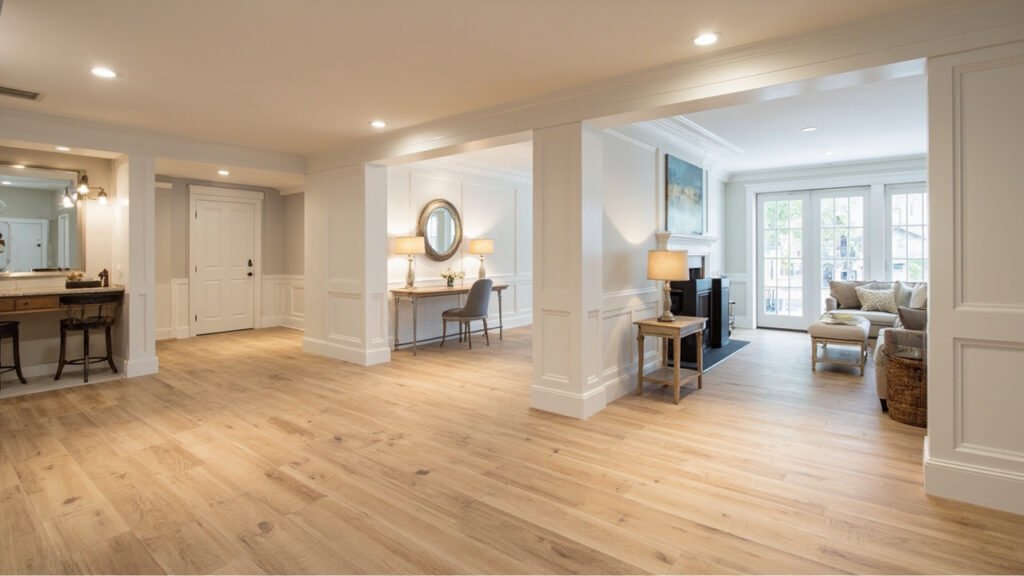
Your basement holds incredible potential. That dark, underutilized space below your Greater Boston home could become a stunning family room, a productive home office, a private gym, or even a fully equipped in-law suite. Luxury basement finishing transforms below-grade spaces into beautiful, functional areas that add real value to your home.
If you are a homeowner in Newton, Wellesley, Brookline, Needham, or any of the surrounding Greater Boston communities, you have probably wondered what basement finishing actually involves. This guide walks you through the process, the considerations specific to Boston-area homes, and what you can expect when working with a basement-specialist contractor.
Why Basement Finishing Requires a Different Approach
Basements are not like other rooms in your home. They exist below grade, which means they face unique challenges that above-ground spaces simply do not encounter. Moisture management, structural considerations, ceiling height constraints, and egress requirements all play a role in how a successful basement project comes together.
In the Greater Boston area, these challenges are amplified. Many homes in communities like Lexington, Weston, Wellesley, and Brookline were built decades ago, meaning basements often have lower ceilings, unconventional layouts, and aging infrastructure that must be addressed before or during finishing work.
Working with a contractor who specializes specifically in basement projects ensures that these challenges are identified and resolved properly from the start.
The Luxury Basement Finishing Process
A professional basement finishing project follows a clear, methodical process designed to protect your home and deliver lasting results.
1. Comprehensive Assessment and Planning
Before any work begins, your contractor should thoroughly evaluate your basement space. This includes checking for existing moisture issues, measuring ceiling heights, assessing the condition of existing mechanical systems, and reviewing local building codes for your specific community, whether that is Wayland, Bedford, Burlington, or Quincy.
Key considerations during assessment include:
- Ceiling height minimums and what can be done to maximize space
- Moisture sources and drainage patterns
- Existing electrical panel capacity
- Plumbing access for bathrooms, wet bars, or kitchenettes
- Egress requirements for any space intended as a sleeping area
2. Framing and Structural Work
Basement framing requires specific techniques that differ from above-ground construction. Walls in below-grade spaces need proper moisture-resistant framing, and gaps between framing members and foundation walls must be addressed to prevent air infiltration and moisture problems down the road.
3. Insulation and Moisture Management
Boston’s climate brings hot, humid summers and cold, snowy winters. Your basement must be properly insulated and protected against moisture migration. This typically involves a combination of insulation, vapor barriers, and sometimes dehumidification systems to maintain comfortable conditions year-round.
Moisture-aware finishing recommendations for below-grade spaces include:
- Closed-cell spray foam insulation for superior moisture resistance
- Rigid foam board insulation against foundation walls
- Proper ventilation strategies for enclosed spaces
- Material selections that resist moisture damage
4. Mechanical Systems and Trade Work
Luxury basement spaces require thoughtful mechanical integration. This includes electrical wiring for lighting, outlets, and any specialized equipment, as well as plumbing for bathrooms, wet bars, or kitchenettes. Your contractor should work with licensed electricians and plumbers who understand the specific requirements of below-grade installations.
5. Finishing and Detail Work
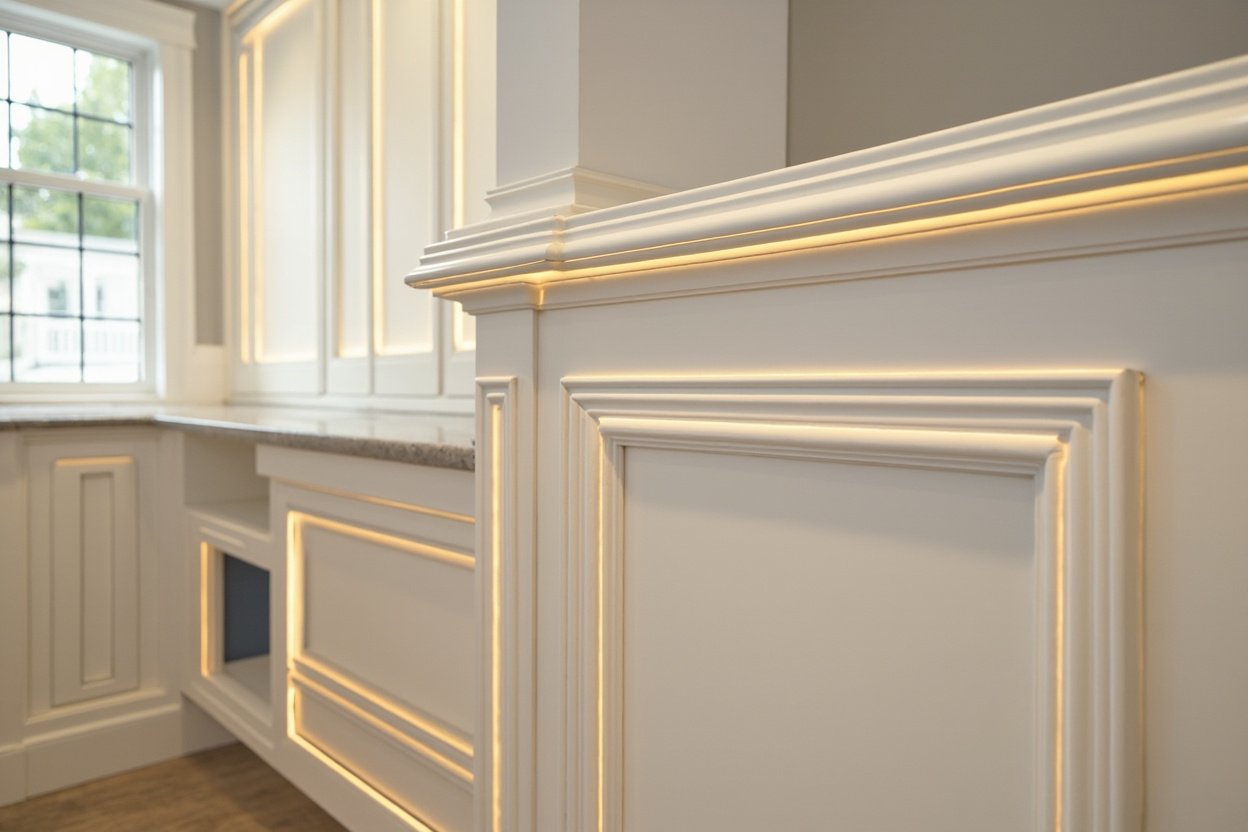
The final phases bring your basement to life. Drywall installation, premium flooring options like luxury vinyl plank or tile, trim work, and lighting installation complete the space. A professional basement finishing team will coordinate all of these elements to deliver a cohesive, polished result.
Popular Luxury Basement Finishing Ideas for Boston Homes
Greater Boston homeowners are transforming their basements into some of the most valuable spaces in their homes. Popular projects include:
- Home theaters with proper acoustics, soundproofing, and viewing screens
- Home gyms with reinforced flooring, mirrors, and proper ventilation
- In-law suites with full bathrooms, kitchenettes, and separate entrances
- Home offices with built-in storage, proper lighting, and sound isolation
- Entertainment spaces with wet bars, game areas, and comfortable seating
- Guest suites with bedroom, bathroom, and living area
Each of these spaces benefits from the custom approach that dedicated basement finishing professionals provide.
Boston-Specific Considerations for Your Project
When finishing a basement in the Greater Boston area, several factors deserve special attention:
Ceiling Height Challenges
Many Boston-area homes were built with 7-foot ceiling heights in the basement, which falls below modern comfort standards. Your contractor may recommend creative solutions like dropped ceiling panels, soffit lighting, or strategic lighting placement to create a sense of openness without extensive structural work.
Egress Requirements
Any basement space intended for sleeping must meet egress requirements, which typically means having a window well and ladder that allows escape in case of emergency. This is especially important for in-law suites and guest bedrooms. Adding egress windows also increases natural light and can improve the overall feel of the space.
Older Home Considerations
Homes in Newton, Lexington, Wellesley, and other established communities often have unique characteristics that affect basement finishing. Foundation conditions, existing utilities, and structural limitations all factor into the planning process. A thorough pre-construction assessment identifies these issues early.
What Sets Professional Basement Finishing Apart
Not all finishing contractors approach basements the same way. A basement-specialist team brings specific advantages:
- Focused expertise in the unique challenges of below-grade spaces
- Professional process with clear scope, clean job sites, and strong communication
- Proper trade coordination for electrical, plumbing, and mechanical work
- Moisture-aware construction techniques that protect your investment
- Single point of contact from planning through completion
Getting Started With Your Basement Project
The first step is a conversation with a basement finishing specialist who understands the specific conditions in your community. Whether you are in Weston, Acton, Natick, Westwood, Braintree, or anywhere in between, a site visit allows your contractor to assess your space, discuss your vision, and outline what is possible.
Ready to transform your basement? Visit our basement finishing page or call (857) 666-8643 for a Free, no-obligation estimate
Your basement deserves the same attention to quality and detail as any room in your home. With the right contractor, that space below your feet can become the favorite room in your house.
When planning your luxury basement finishing boston, focus on proper scope definition, moisture management, and selecting materials suited for below-grade spaces.