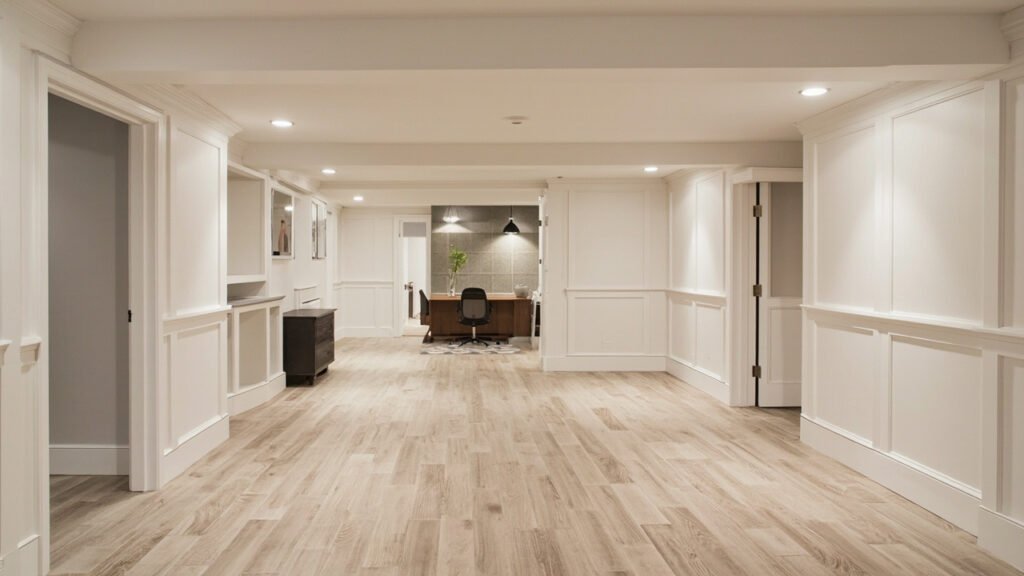
If you’re working from home more often than you expected a few years ago, you’re not alone. Many homeowners across Greater Boston—from Newton to Wellesley to Lexington—are discovering that their upstairs bedrooms and kitchen tables just don’t cut it anymore. A dedicated home office in your basement can give you the professional space you need without sacrificing your living areas. At Basement Finishing of Boston, we specialize in transforming below-grade spaces into beautiful, functional rooms that stand up to New England’s unique challenges.
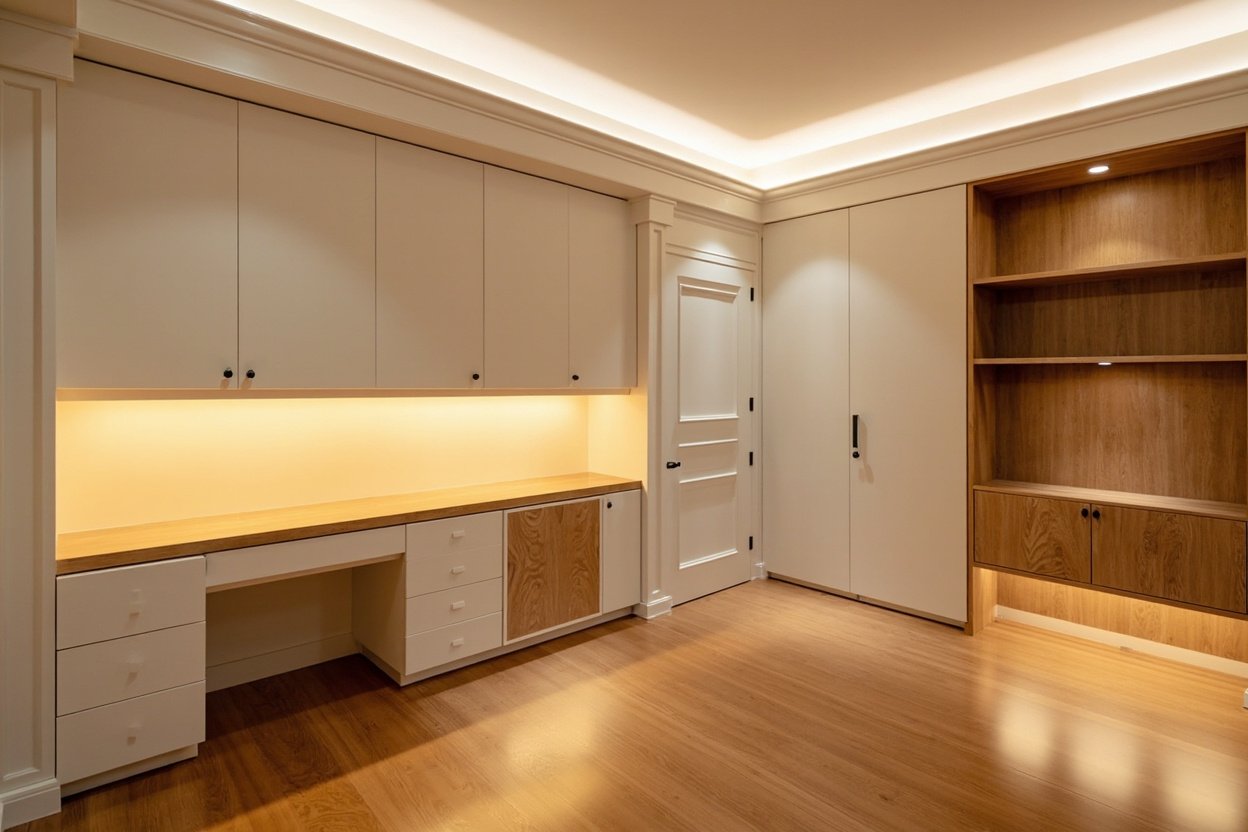
Why Basements Make Great Home Offices
Basements offer several advantages for home offices that other rooms simply can’t match. First, they’re typically separate from the main living areas, which means less distraction and better separation between work and family life. Many homeowners in Brookline and Westwood appreciate how a basement office creates a true “commute” feeling—even if it’s just thirty steps to your desk. Additionally, basements tend to have more stable temperatures year-round, which can actually help with energy efficiency when properly finished and insulated. With the right moisture management and ventilation strategy, your basement office can be just as comfortable as any room upstairs.
Key Considerations for Boston Basements
Greater Boston homes present some specific challenges that require careful planning. Many homes in Newton, Wellesley, and Lexington were built decades ago, meaning basements often have lower ceiling heights than newer construction. This affects everything from lighting placement to furniture selection. Egress requirements are another critical consideration—while technically only required for basement bedrooms, adding egress windows can improve safety, natural light flow, and overall value. Our team handles all these details, including working with licensed electricians for proper outlet placement and dedicated circuits for your office equipment.
Moisture Management Is Non-Negotiable
New England basements face humidity challenges that homeowners in other parts of the country simply don’t encounter. Spring rains in Wayland and Natick, winter snowmelt in Bedford and Burlington, and the general humidity of a Massachusetts summer all put pressure on below-grade spaces. Before finishing your basement office, proper moisture barriers, adequate insulation, and appropriate ventilation are essential. We typically recommend:
- Interior drainage systems or sump pumps for water management
- Rigid foam insulation on foundation walls before framing
- Vapor barriers strategically placed to prevent moisture buildup
- Dehumidification solutions sized appropriately for your space
- Materials designed for below-grade use, such as moisture-resistant drywall
Taking these steps protects your investment and ensures your home office remains comfortable and productive year after year.
Design Ideas for Your Basement Home Office
Once the foundation is solid, it’s time to think about how you want your space to look and function. Here are some popular approaches our clients in Quincy and Braintree have requested:
- Minimalist Modern: Clean lines, neutral colors, and built-in shelving maximize your space and minimize distractions. This style works particularly well in smaller basements where every square foot counts.
- Warm and Traditional: Wood accents, warm lighting, and classic furniture create a cozy atmosphere that makes you actually want to spend time working.
- Multi-Functional Space: Include a comfortable seating area for client meetings or a small wet bar corner for after-work relaxation. We can design these additions as part of a comprehensive basement remodeling project.
- Natural Light Optimization: Even without large windows, strategic use of LED lighting that mimics daylight can improve your mood and productivity throughout the workday.
Technical Requirements for a Productive Home Office
Your basement home office needs more than just a desk and a chair. Modern work requires robust infrastructure. During your finishing project, consider discussing these elements with our team:
- Electrical Capacity: Multiple outlets, USB charging stations, and potentially dedicated circuits for computers, monitors, and servers prevent overloaded circuits and flickering lights.
- Data and Networking: Hardwired ethernet connections often provide more reliable internet than WiFi alone, especially in below-grade spaces where signal penetration can be challenging.
- Climate Control: A supplemental heating source, such as a ductless mini-split, gives you precise temperature control independent of your home’s main HVAC system.
- Acoustic Considerations: Soundproofing insulation in walls and ceilings helps you take calls without echo and keeps household noise from interrupting your concentration.
Making the Most of Your Space
Whether your basement is 500 square feet or 1500, thoughtful design makes a tremendous difference. Custom built-ins can provide storage without wasting valuable floor space. Glass partition walls can separate your office area from a family room or gym while maintaining an open feel. If your basement has low spots or uneven floors, LVP (luxury vinyl plank) flooring offers durability and moisture resistance while creating a professional aesthetic. Our finishing process handles everything from framing to trim work, ensuring cohesive results.
Many homeowners in Weston and Acton have also found that adding a basement bathroom to their office area adds tremendous convenience. Instead of climbing stairs every time you need a break, a dedicated restroom makes your office feel even more professional and self-contained.
Ready to transform your basement? Visit our basement finishing page or call (857) 666-8643 for a Free, no-obligation estimate
When planning your basement home office ideas, focus on proper scope definition, moisture management, and selecting materials suited for below-grade spaces.