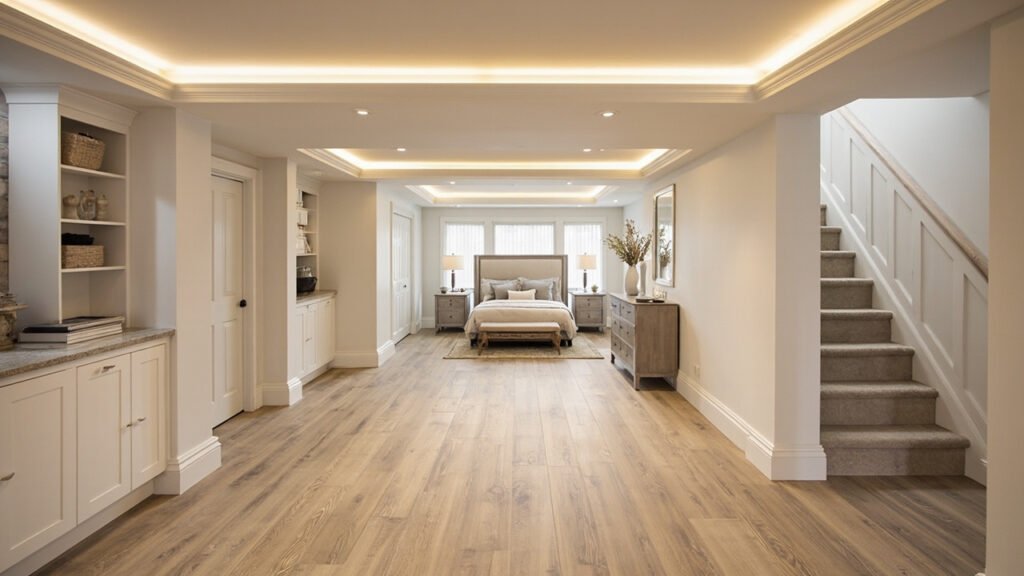
When you think about maximizing your home’s living space, your basement might be the most underutilized room in the house. For Boston-area homeowners, a well-designed basement guest suite can add significant value to your property while creating a comfortable, private space for visiting friends and family. At Basement Finishing of Boston, we specialize in transforming below-grade spaces into beautiful, functional guest suites that meet the unique challenges of New England homes.
Why Boston Homeowners Are Choosing Basement Guest Suites
Greater Boston homes often have older construction with unconventional layouts, making additional bedroom space at a premium. A basement guest suite offers an ideal solution because it provides:
- Private accommodations for guests without sharing your living areas
- Potential income potential through short-term rental opportunities
- A comfortable space for aging parents or adult children returning home
- Additional property value that appeals to future buyers
Whether you regularly host family visitors or simply want a versatile space that can serve multiple purposes, a basement guest suite is a smart investment for your Newton, Wellesley, or Brookline home.
Key Design Considerations for Below-Grade Guest Suites
Designing a basement guest suite requires careful attention to several factors that differ from above-ground room additions. Our team considers these elements in every project we undertake in the Greater Boston area.
Ceiling Height and Code Requirements
Many older Boston-area homes have basements with lower ceiling heights than modern code requires. In Massachusetts, residential spaces typically need a minimum ceiling height of seven feet for livable areas. If your basement falls short, we can explore options such as:
- Under-floor ductwork rerouting to open up headroom
- Dropped ceiling solutions that maintain code compliance while allowing access to utilities
- Strategic lighting placement that creates the illusion of more space
Egress requirements are another critical consideration. Massachusetts building codes require legal emergency exits in any basement bedroom. We work with you to determine whether new egress windows, window wells, or other solutions best fit your layout and budget.
Moisture Management for Boston Climates
New England weather brings humidity, rain, and snow—challenges that make moisture management essential for below-grade spaces. We address moisture concerns through:
- Comprehensive moisture testing before construction begins
- High-quality vapor barriers and insulation packages
- Proper ventilation solutions tailored to your basement’s specific conditions
- Material selections designed to withstand occasional moisture exposure
Our finishing recommendations consider the reality of Boston’s climate while ensuring your guest suite remains comfortable and dry year-round.
Popular Features for Basement Guest Suites
While every homeowner has different needs, we find that certain features consistently enhance the functionality and appeal of basement guest spaces. Consider incorporating these elements into your design:
- A dedicated bathroom with full amenities, including shower, toilet, and vanity
- A compact kitchenette or wet bar for guest independence
- Climate control zone separate from the main house
- Sound insulation between the guest suite and living areas above
- Natural light from egress windows or light wells
The scope of your guest suite project depends on how you plan to use the space. Some homeowners prefer a simple bedroom with an adjacent bathroom, while others want a full apartment-style layout with kitchen facilities and a separate entrance.
Materials and Finishes That Last
Selecting the right materials makes a significant difference in how your basement guest suite performs over time. We recommend:
- Luxury vinyl plank (LVP) flooring for durability, moisture resistance, and the appearance of hardwood without the sensitivity to humidity
- Moisture-resistant drywall in all below-grade walls to prevent mold and deterioration
- LED recessed lighting to brighten the space while keeping energy costs low
- Truncated ceiling tiles that provide easy access to pipes and wiring while maintaining a polished look
Our licensed electricians and plumbers handle all trade work, ensuring that fixtures, outlets, and plumbing are installed correctly and up to code.
The Design Process with Basement Finishing of Boston
We begin every basement guest suite project with a thorough assessment of your existing space. This includes checking for moisture issues, measuring ceiling heights, evaluating existing electrical and plumbing, and discussing your vision for the finished area. From there, we create a clear scope that covers:
- Demolition and removal of existing finishes
- Framing and structural modifications
- Insulation and vapor barrier installation
- Drywall, painting, and trim work
- Flooring and ceiling solutions
- Electrical, plumbing, and lighting installation
Throughout the process, we maintain clear communication about timelines, decisions needed, and what to expect next. Our job sites stay organized, and we clean up thoroughly at the end of each workday.
Making Your Basement Guest Suite a Reality
Designing a basement guest suite for your Lexington, Wellesley, or surrounding Boston home is an investment in both your lifestyle and your property value. With careful planning, quality construction, and attention to the unique requirements of below-grade spaces, you can create a comfortable, welcoming environment that serves your family for years to come.
Our team understands the specific challenges of finishing basements in older New England homes, from moisture concerns to code compliance. We bring that expertise to every project, helping homeowners in Acton, Natick, Wayland, and throughout Greater Boston make the most of their below-grade spaces.
Ready to transform your basement? Visit our basement finishing page or call (857) 666-8643 for a Free, no-obligation estimate
When planning your basement guest suite designs, focus on proper scope definition, moisture management, and selecting materials suited for below-grade spaces.