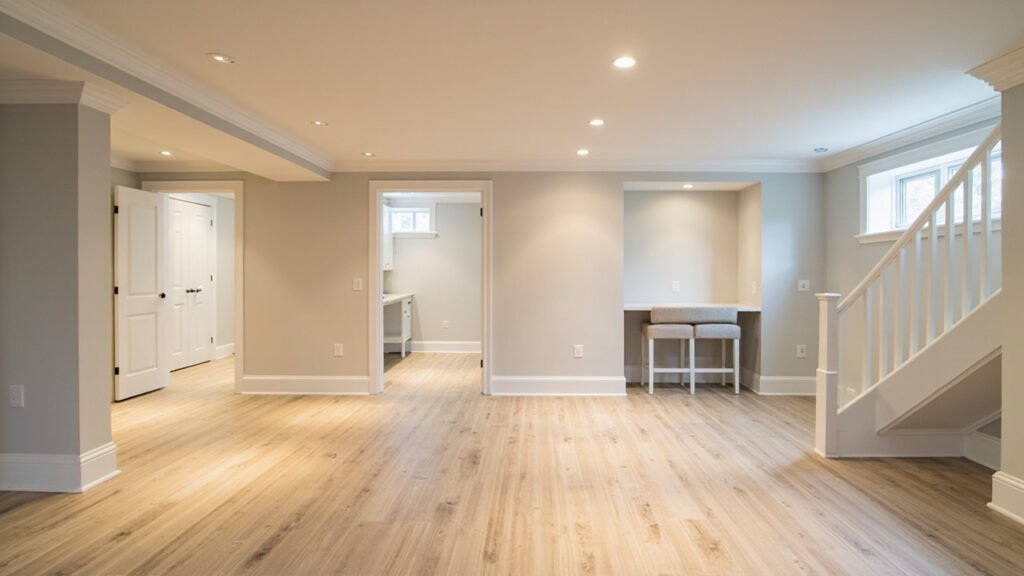
Finishing your basement is one of the smartest investments you can make as a Boston-area homeowner. It transforms unused square footage into living space, increases your home’s value, and gives your family room to grow without the cost and hassle of moving. But before you start planning your home theater or guest suite, you need to understand what affects the cost to finish a basement in Boston and what goes into creating a comfortable, lasting space in our unique New England environment.
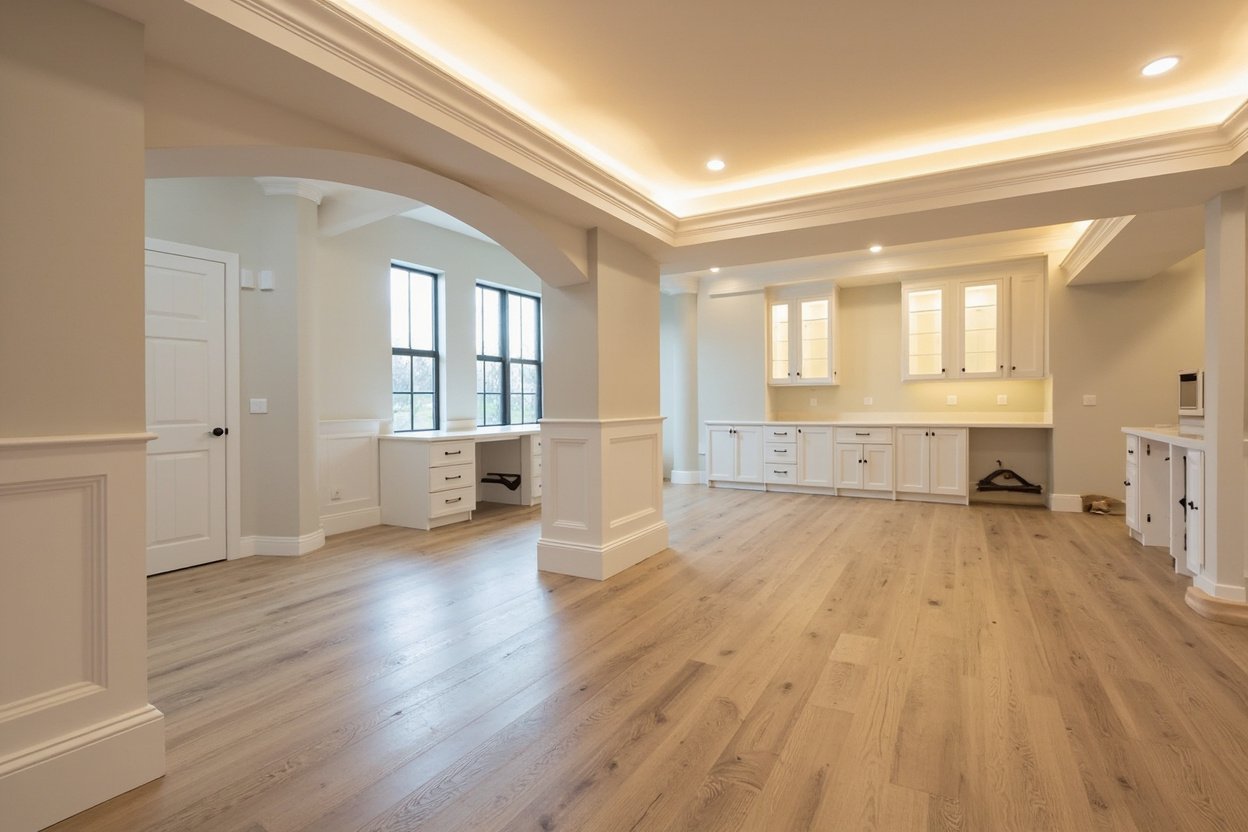
What Determines Your Basement Finishing Cost
Every basement is different, and several factors influence your total investment. The size of your space is the starting point—most basement finishing projects in Greater Boston range from 500 to 1,500 square feet. Beyond square footage, the condition of your existing foundation, the age of your home, and any existing moisture issues will affect preparation costs.
Here are the primary cost factors to consider:
- Square footage of the space being finished
- Current condition of foundation walls and floors
- Whether you need moisture mitigation or waterproofing
- Complexity of the layout and number of rooms
- Quality level of finishes you select
- Required mechanical work (electrical, plumbing, HVAC)
- Accessibility for materials and debris removal
Because every home presents different challenges, we always recommend an on-site consultation to assess your specific space and provide accurate pricing.
Boston-Area Homes Present Unique Considerations
Boston’s housing stock includes many beautiful older homes built in the early-to-mid 20th century. These homes often have basements with lower ceiling heights than modern codes recommend, irregular foundation shapes, and aging utility systems that may need updating before finishing can begin.
If your home was built before 1978, you may encounter lead paint concerns during any demo work. A qualified contractor will follow EPA guidelines for safe renovation in older homes.
Ceiling height matters significantly for livability. Most building codes require a minimum clear height of 7 feet for habitable spaces, though some grandfather provisions exist. During your consultation, we’ll measure your space and discuss options if your basement has lower ceilings—including creative solutions like recessed lighting and strategic soffit work.
Understanding the Basement Finishing Scope
A complete basement finishing project involves several distinct phases. Understanding these helps you plan and budget appropriately:
- Initial assessment and design planning – We evaluate your space, discuss your goals, and create a detailed scope
- Preparation and moisture management – Addressing any water issues, applying moisture barriers, and preparing the substrate
- Framing and insulation – Creating room divisions and insulating exterior walls to code
- Mechanical rough-ins – Electrical, plumbing, and HVAC work by licensed trade professionals
- Drywall installation and finishing – Hanging, taping, mudding, and sanding all surfaces
- Flooring installation – Typically luxury vinyl plank or tile for durability in below-grade spaces
- Painting, trim, and finishing – Final paint, baseboards, door casings, and millwork
- Lighting and fixtures – Installing all light fixtures, outlets, switches, and any specialty features
This comprehensive approach ensures your basement isn’t just finished—it’s finished right, with attention to the details that prevent problems down the road.
Moisture: The #1 Consideration for Boston Basements
Boston’s climate means dealing with humidity, seasonal temperature swings, and occasional flooding concerns. Unlike above-ground rooms, basements require special attention to moisture management. Without proper preparation, finished basements can develop mold, musty odors, and water damage that compromise your investment.
A quality basement finishing contractor will:
- Assess your foundation for cracks, seeps, and water entry points
- Recommend appropriate moisture barriers and dehumidification systems
- Use materials designed for below-grade installation
- Ensure proper ventilation and air circulation planning
We take moisture seriously because we’ve seen what happens when it’s ignored. Our process includes moisture testing and preparation steps that protect your investment for years to come.
Optional Upgrades and Add-Ons
Beyond basic finishing, many homeowners choose to add features that enhance their basement’s functionality and value:
- Basement bathroom – Adding a full or half bath requires plumbing rough-in but dramatically increases usability
- Wet bar or kitchenette – Perfect for entertainment spaces and in-law suites
- Egress windows – Required by code for bedrooms and provides emergency exit plus natural light
- Home theater or media room – Acoustic treatments, wiring for A/V equipment, and specialized lighting
- Gym flooring – Rubber flooring or impact-absorbing surfaces for workout areas
- Stair updates – Refinishing or replacing basement stairs for safety and aesthetics
These additions are priced separately from basic finishing costs but can significantly enhance how you use your space.
Working with a Basement Specialist
Basement finishing isn’t the same as typical room additions. The challenges of below-grade construction—moisture management, limited natural light, lower ceiling heights, and unique building code requirements—require specialized knowledge and experience.
Basement Finishing of Boston brings dedicated basement expertise to every project. Our team understands the specific considerations of finishing spaces in Greater Boston homes, from the moisture-prone basements of historic Brookline colonials to the walk-out basements common in Newton and Wellesley developments.
We maintain clear communication throughout your project, keep job sites clean and organized, and handle all aspects of your basement transformation—from initial design through final walkthrough.
Ready to transform your basement? Visit our basement finishing page or call (857) 666-8643 for a Free, no-obligation estimate
Planning Your Boston Basement Project
While we can’t provide exact pricing without seeing your specific space, understanding these cost factors helps you budget and plan realistically. Most basement finishing projects in the Greater Boston area fall within a predictable range based on scope and finish level selected.
The best first step is scheduling a consultation. We’ll visit your home, assess your basement’s current condition, discuss your goals and vision, and provide a detailed estimate that accounts for your specific situation. This visit typically takes about an hour and comes with no obligation.
Whether you’re dreaming of a cozy family room, a productive home office, a private guest suite for visitors, or a complete in-law apartment, finishing your basement adds valuable living space to your home at a fraction of the cost of building an addition. And in Boston’s competitive real estate market, that extra square footage makes a meaningful difference in both your daily life and your home’s resale value.
When planning your cost to finish basement boston, focus on proper scope definition, moisture management, and selecting materials suited for below-grade spaces.