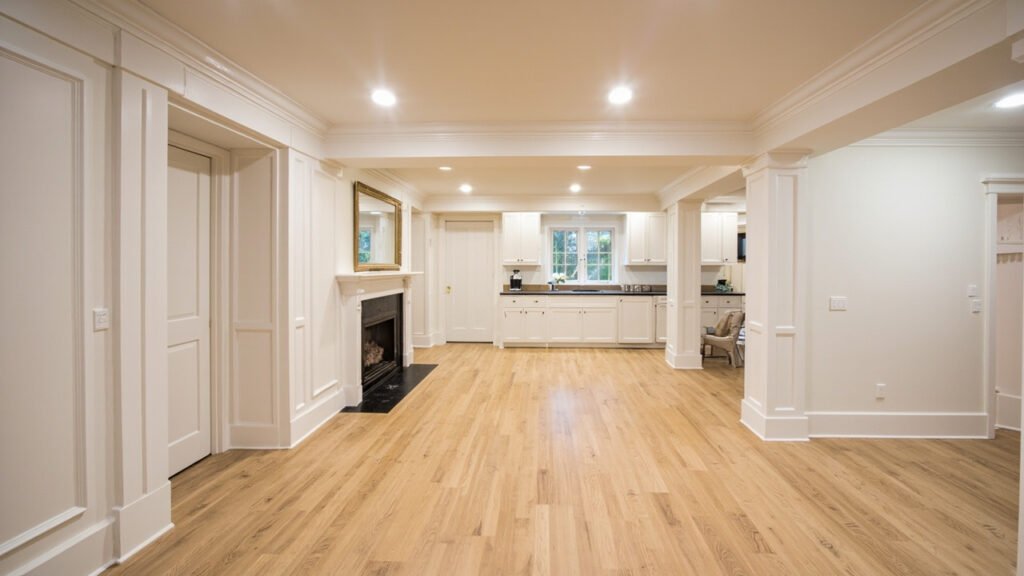
Boston-area homeowners are increasingly discovering the untapped potential in their basements. Whether you own a historic Newton colonial, a mid-century ranch in Needham, or a contemporary home in Wellesley, your basement represents square footage that could transform how your family lives. This guide walks you through everything you need to know about basement renovation in Boston, from understanding local considerations to choosing the right finishing partner.
Why Boston Homeowners Are Finishing Their Basements
With home prices remaining strong across Greater Boston, homeowners are looking for ways to add living space without the cost and hassle of moving. A finished basement offers an attractive alternative, giving you additional rooms without expanding your home’s footprint.
Beyond value, basements in our region serve practical purposes. Many Boston-area homes were built with generous ceiling heights that make below-grade spaces surprisingly comfortable. Finished basements create room for home offices, gyms, entertainment areas, and even independent living quarters for family members.
Popular Uses for Your Finished Basement
When planning your basement renovation, Boston homeowners typically choose one or more of these configurations:
- Family entertainment room — A casual space for movie nights, game days, and everyday relaxation
- Home office or study — Dedicated workspace away from household distractions
- Home gym or wellness area — Exercise space without gym membership fees
- Guest suite or in-law apartment — Private quarters for visiting family members
- Home theater — An immersive entertainment experience
These projects often include supporting features like basement bathrooms, wet bars, or kitchenettes. A basement-specialist contractor will help you prioritize your wish list and create a realistic scope that matches your goals and budget.
The Basement Finishing Process: What to Expect
A professional basement renovation typically follows these phases:
- Initial consultation and assessment — Your contractor evaluates the space, discusses your vision, and identifies any existing issues
- Design and planning — Detailed layouts, material selections, and scope documentation
- Permitting — Your contractor handles permit applications and coordinates with local building departments
- Framing and structural work — Walls, soffits, and any required modifications
- Mechanical rough-in — Electrical, plumbing, and HVAC work by licensed tradespeople
- Insulation and moisture barriers — Critical for below-grade comfort and energy efficiency
- Drywall, painting, and trim — The finishing details that make the space feel like the rest of your home
- Flooring and final touches — LVP flooring, tile, lighting fixtures, and hardware
Throughout the process, you should expect clear communication, organized job sites, and regular updates on progress. Professional basement specialists maintain clean work areas and minimize disruption to your daily life.
Boston-Specific Challenges and Solutions
Basement finishing in Greater Boston comes with unique considerations that generic contractors may overlook:
Moisture Management
New England basements face moisture challenges that require careful attention. Waterproofing strategies, proper ventilation, and moisture-resistant materials protect your investment. Your contractor should assess foundation conditions and recommend appropriate solutions, which may include interior drainage systems, dehumidification, or vapor barriers specifically designed for below-grade spaces.
Ceiling Height Considerations
Many Boston-area homes, particularly older Colonials and Capes, have basement ceiling heights that fall below modern building code minimums or feel cramped after finishing. Experienced basement contractors know various approaches to maximize perceived height, including dropped soffits that conceal mechanical systems while maintaining code compliance.
Egress Requirements
Building codes require proper egress from finished basement spaces, especially for bedrooms or living areas. Your contractor will ensure compliance through appropriately sized doors, windows, or walk-out access. In towns like Lexington, Wellesley, and Brookline, local inspectors pay close attention to these requirements.
Older Home Considerations
Historic homes in communities like Weston, Concord, and Brookline may have foundation issues, outdated electrical systems, or non-standard construction that affects your renovation options. A basement specialist familiar with these properties understands how to work within existing constraints while updating the space for modern living.
What Sets Basement Specialists Apart
Not all contractors approach basement finishing the same way. A basement-focused company brings advantages that general contractors may lack:
- Moisture expertise — Deep knowledge of below-grade challenges and proven mitigation strategies
- Efficient processes — Refined workflows that streamline timelines and reduce complications
- Appropriate equipment — Tools and techniques suited specifically to basement environments
- Trade relationships — Established connections with electricians and plumbers experienced in basement work
- Focused attention — Your project receives the specialized focus it deserves
Sun Shore Construction’s basement finishing division brings this focused expertise to homeowners throughout Greater Boston, serving communities from Burlington and Bedford to Quincy and Braintree.
Getting Started With Your Basement Renovation
If you’re considering finishing or remodeling your basement, the first step is a conversation with an experienced basement contractor. During an initial assessment, you’ll discuss your goals, see your space’s potential, and receive guidance on what’s possible within your budget and home’s constraints.
Ready to transform your basement? Visit our basement finishing page or call (857) 666-8643 for a Free, no-obligation estimate
Whether you’re in Needham, Newton, Natick, or Wayland, our team is ready to help you unlock the hidden value in your home’s lower level. A finished basement is more than extra square footage—it’s where your family’s next favorite memories will happen.
When planning your basement renovation boston, focus on proper scope definition, moisture management, and selecting materials suited for below-grade spaces.