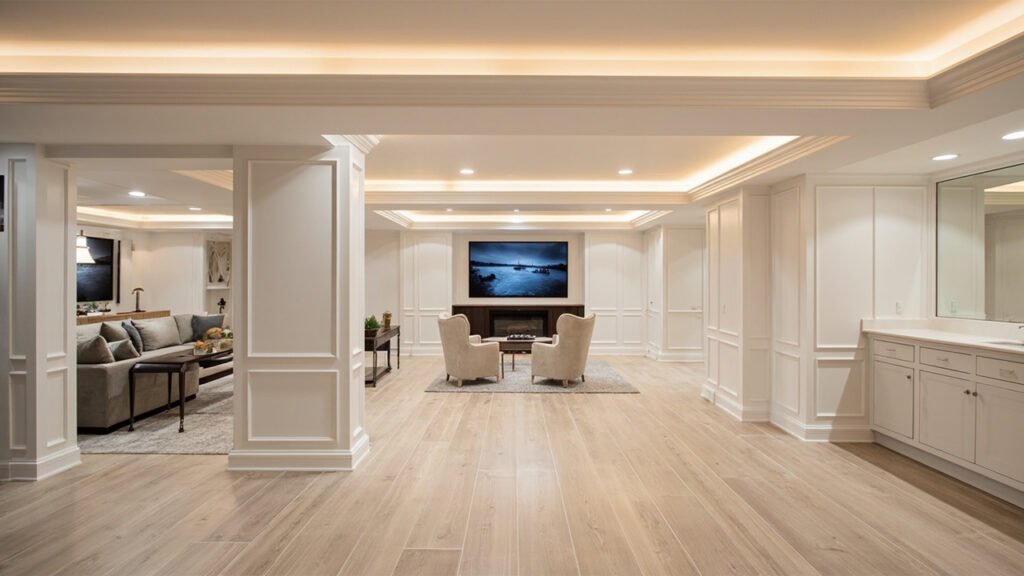
Thinking about adding a home theater to your basement? You’re not alone. More homeowners across Greater Boston are discovering that their basement is the perfect place for a dedicated entertainment space—away from the main living areas, easy to darken, and with natural sound insulation from the surrounding earth. But below-grade construction comes with unique considerations that go beyond picking out a big screen.
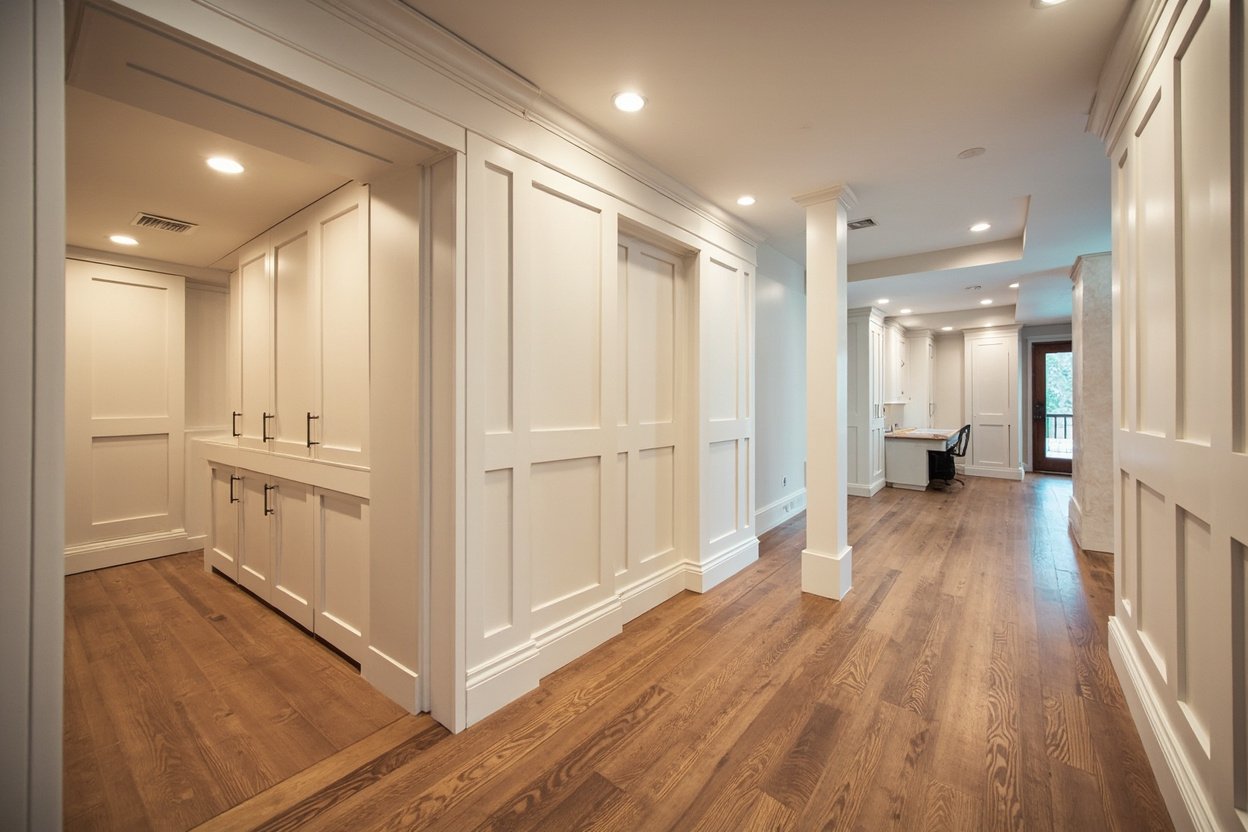
In this guide, we’ll walk you through what you need to know before starting your basement home theater installation, from moisture management to ceiling height challenges common in Boston-area homes.
Why a Basement Is Ideal for a Home Theater
Basements offer advantages that above-ground rooms simply can’t match for theater spaces. The earth surrounding your foundation acts as natural insulation, helping to dampen outside noise and keep your theater quiet. Basement windows are typically small or absent in older Boston homes, making it easier to achieve the darkness needed for a true cinematic experience.
Additionally, a basement home theater keeps movie nights and game-day gatherings contained in a lower level, away from the rest of the household. That means you can watch at full volume without disturbing family members in other parts of the house.
Key Challenges for Basement Home Theaters in Greater Boston
Before you get too far into planning, it’s important to understand the specific challenges that come with finishing a basement in our area. Older homes in Newton, Brookline, Wellesley, and Lexington often have lower ceiling heights than modern code requires. Many finished basements in these neighborhoods end up feeling cramped if ceiling height isn’t addressed early in the planning process.
Moisture is another primary concern. Boston’s climate brings humidity in summer and freeze-thaw cycles in winter, both of which can affect below-grade spaces. Without proper moisture management, your new theater could develop mold, musty odors, or deterioration that ruins your investment.
Egress requirements also come into play. Massachusetts building codes requirebasements used as living spaces to have adequate emergency exits. If your current basement doesn’t have an egress window or exterior access, this will need to be part of your finishing plan.
Planning Your Basement Home Theater Installation
A successful theater build starts with understanding what you want from the space. Think about the following:
- Seating capacity—How many people do you want to seat on a typical movie night?
- Screen size and type—Projector and screen, or large-format TV? Your ceiling height and room dimensions will influence this choice.
- Audio setup—Surround sound, Dolby Atmos, or a simpler stereo setup?
- Lighting—Recessed lighting, sconces, or LED strip lighting for ambiance?
- Additional features—Wet bar, snack station, or storage for gaming equipment?
Having a clear vision helps your contractor scope the work accurately and ensures nothing gets left out of the finishing process.
Our Approach to Basement Home Theater Construction
At Basement Finishing of Boston, we approach every home theater installation with a systematic process designed to eliminate surprises. Here’s how we work:
- Initial consultation—We discuss your vision, assess your basement’s current condition, and identify any structural or moisture concerns.
- Design and scope development—We create a detailed scope covering framing, insulation, drywall, flooring, lighting, and any trade work like electrical or plumbing.
- Moisture management—We install appropriate vapor barriers, insulation, and ventilation solutions suited to below-grade conditions.
- Framing and drywall—Walls are framed to accommodate wiring, speaker placement, and any built-in features.
- Finishing touches—Flooring, trim, painting, lighting fixtures, and any custom millwork are completed to your specifications.
- Final walkthrough—We review the finished space with you to ensure everything meets your expectations.
Throughout the project, we maintain a clean job site and keep you informed with clear communication. We coordinate licensed electricians for any wiring and plumbers for features like a basement bathroom or wet bar.
Moisture-Aware Finishing for Boston Basements
Moisture management isn’t optional in our climate—it’s essential. We recommend several strategies for keeping your basement theater dry and comfortable:
- Interior vapor barriers—Properly installed barriers prevent moisture from migrating through concrete foundation walls.
- Appropriate insulation—Closed-cell spray foam or rigid foam board insulation rated for below-grade use provides both thermal resistance and moisture blocking.
- Dehumidification—A properly sized dehumidifier keeps humidity levels in check during warm summer months.
- Floor isolation—Installing flooring over a subfloor system with a moisture barrier protects your finished floor from any residual dampness.
These steps add some cost upfront but protect your investment from the moisture damage that plagues poorly finished basements throughout Greater Boston.
Ready to Start Your Basement Home Theater Project?
Whether you’re in Needham, Newton, Brookline, or any of the surrounding communities, Basement Finishing of Boston has the experience to turn your basement into the entertainment space you’ve been dreaming about. We handle every aspect of the project—from framing and insulation to electrical and finishing work—under one roof.
Ready to transform your basement? Visit our basement finishing page or call (857) 666-8643 for a Free, no-obligation estimate
When planning your basement home theater installation, focus on proper scope definition, moisture management, and selecting materials suited for below-grade spaces.