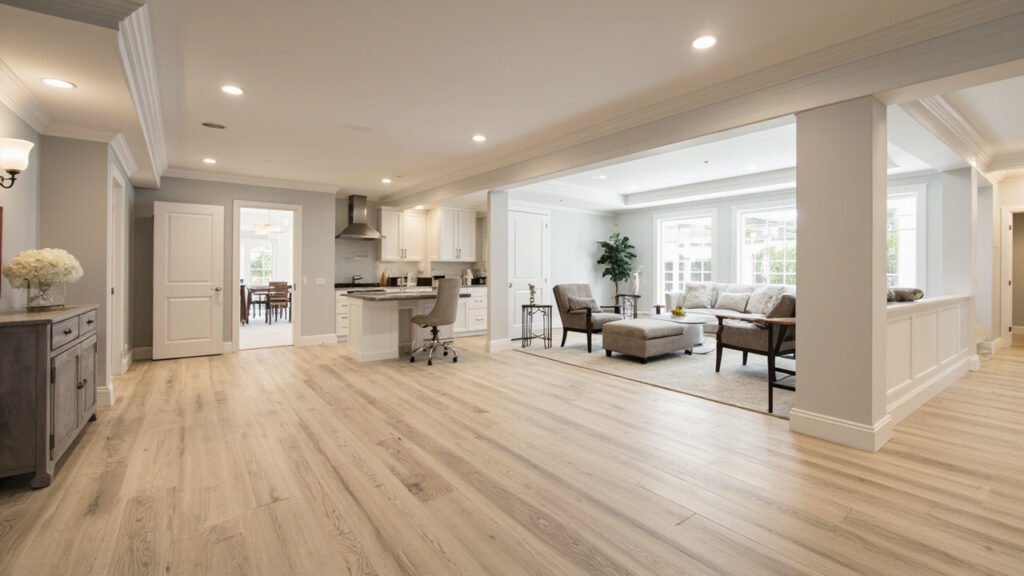
Working from home has become a permanent fixture for many Greater Boston professionals, and finding the right space for focused work can be challenging. If you have an unfinished or underutilized basement, you have significant square footage waiting to become your ideal home office. Basement Finishing of Boston helps homeowners throughout Greater Boston—from Newton to Lexington, Wellesley to Quincy—transform below-grade spaces into beautiful, functional workspaces that support productivity and professional presence.
Why Consider a Basement Home Office?
Basements offer distinct advantages for home office conversions. They typically provide natural separation from the main living areas of your home, which means fewer distractions during important calls and meetings. Many Boston-area homes have basements with generous square footage that rivals or exceeds the size of primary bedrooms upstairs. A basement home office gives you dedicated workspace while keeping your living areas free for family time and relaxation.
Planning Your Basement Home Office
Before diving into design ideas, successful basement home office planning requires addressing several key factors that differ from above-grade conversions.
- Ceiling Height: Many older Greater Boston homes were built with basements designed for storage, not living space. Standard basement ceiling heights may be lower than modern expectations. During your consultation, we’ll assess whether you’ll need to lower the floor, raise the ceiling, or work creatively with the existing dimensions to create a comfortable workspace.
- Moisture Management: Below-grade spaces require careful attention to moisture. We recommend comprehensive moisture testing and, when needed, interior drainage systems or dehumidification solutions before finishing. Proper moisture management protects your investment and ensures a healthy indoor environment.
- Egress Requirements: Massachusetts building codes require proper egress windows in finished basement spaces used as living areas. If your basement lacks adequate emergency exits, we can coordinate egress window installation to meet code requirements while maximizing natural light.
Design Ideas and Layouts
Once we’ve addressed the foundational elements, the creative work begins. Here are popular basement home office configurations our clients have implemented in homes throughout Brookline, Westwood, Weston, and surrounding communities.
- Single-Function Home Office: A dedicated room with a large desk area, built-in shelving, and professional backdrops for video calls. This layout works well for those who need serious separation between work and home life.
- Office and Guest Suite Combo: For homes where basement guest space is valuable, we can design a flexible layout with a Murphy bed or sleeper sofa and a sliding partition that creates a private office during work hours.
- Multifunctional Workspace: Combine your home office with a small gym, craft area, or reading nook. Strategic zoning with area rugs, furniture placement, and lighting helps define different zones within a single open space.
- Executive Suite: For larger basements in homes around Wayland, Bedford, or Burlington, consider a full office with a wet bar or kitchenette, a seating area for client meetings, and high-end finishes that project professionalism.
Lighting Solutions for Below-Grade Spaces
One of the most common concerns about basement offices is feeling closed in or dim. Thoughtful lighting design transforms these perceptions entirely.
Layered lighting works best in basement offices. We typically recommend a combination of ambient recessed lighting for general illumination, task lighting at the desk area with adjustable LED fixtures, and accent lighting to highlight architectural features or artwork. If your basement has existing windows or the potential for egress window upgrades, maximizing natural light should be a priority. Light wells and window wells can be designed to bring in significantly more daylight than traditional basement windows.
Consider full-spectrum LED bulbs that mimic natural daylight, especially if you work early mornings or late evenings. Proper lighting not only improves visibility but also affects mood and productivity—important factors for a space where you’ll spend many working hours.
Finishing Touches: Flooring, Storage, and Sound Control
The details matter when creating a professional-quality home office. Flooring selection impacts both aesthetics and functionality. Luxury vinyl plank (LVP) flooring performs exceptionally well in basements because it handles moisture variations without warping or damage. It also provides a professional appearance that works well on video calls. Tile flooring is another excellent option, particularly if you want radiant floor heating for comfort during cold New England winters.
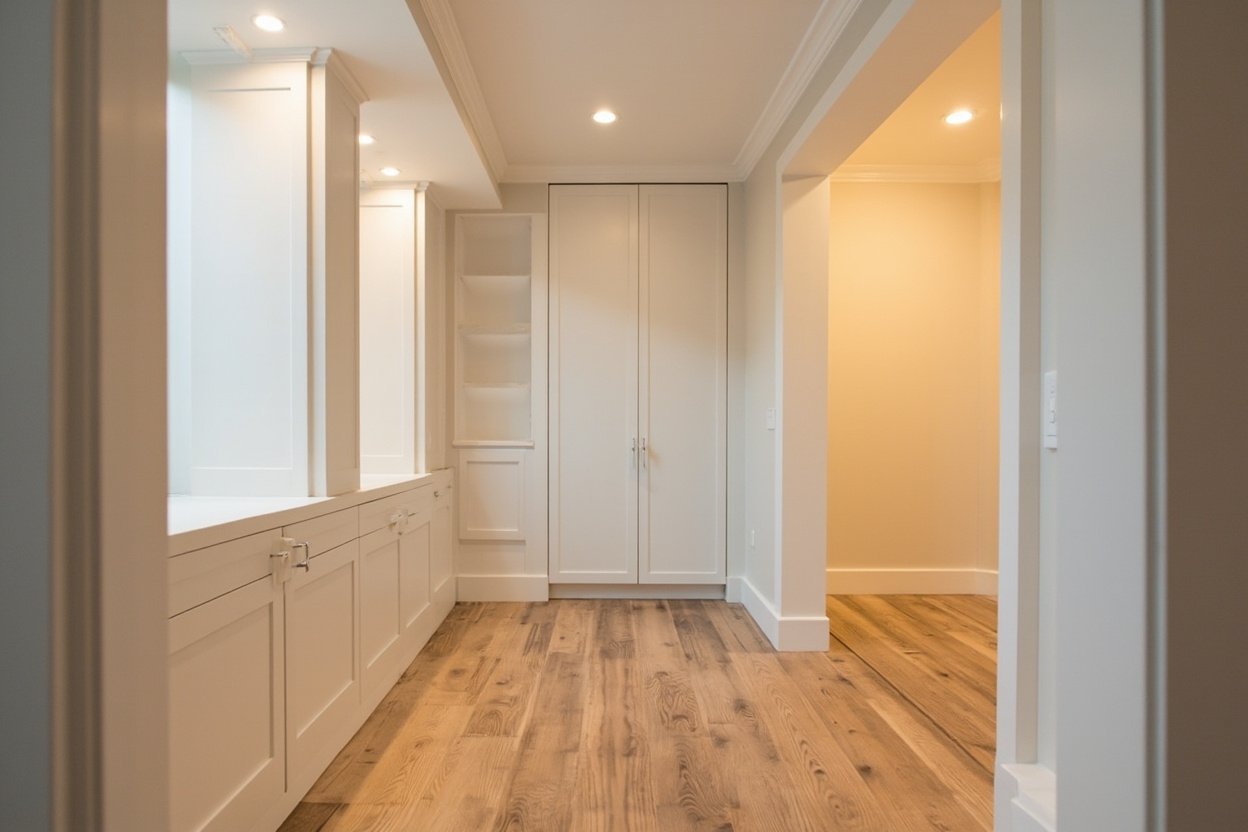
Storage solutions keep your workspace organized and professional. Built-in bookshelves and cabinetry maximize wall space while maintaining a clean, organized appearance. We often incorporate custom millwork that includes file storage, supply cabinets, and display areas for professional credentials or personal touches.
Sound control is essential in below-grade offices. The concrete foundation of most basements already provides good sound dampening, but adding insulation to exterior walls and considering acoustic panels or strategic furniture placement helps create the quiet environment important for focused work and clear conference calls.
Boston-Specific Considerations for Your Basement Office
Homes throughout Greater Boston present unique finishing challenges. Many houses in Newton, Lexington, and Wellesley were built in the early-to-mid 20th century with basements designed for coal storage and utility equipment. These spaces often have irregular floor plans, foundation walls with character (and quirks), and may need updated electrical service to support modern home office equipment.
Our team coordinates with licensed electricians to ensure your basement office has adequate outlets, dedicated circuits for computers and equipment, and proper grounding. We also address plumbing considerations if you’re interested in adding a basement bathroom or wet bar to your office space—conveniences that many professionals find valuable for hosting client meetings.
Proper insulation is critical for Boston-area basements, where temperature swings between humid summers and freezing winters can affect comfort and equipment longevity. We use proven insulation strategies that keep your basement office comfortable year-round while meeting Massachusetts energy code requirements.
Ready to transform your basement? Visit our basement finishing page or call (857) 666-8643 for a Free, no-obligation estimate
Start Your Basement Office Journey
Creating a basement home office is an investment in your productivity, your home’s value, and your quality of life. Basement Finishing of Boston brings professional expertise to every project, from initial design through final walkthrough. We handle the complete scope—framing, insulation, drywall, flooring, lighting, and finishing details—so you can focus on your work while we handle the construction.
Whether you’re in Acton, Natick, Quincy, or Braintree, we’d love to help you discover what’s possible in your basement space. Contact us today to schedule your free consultation and explore how we can create a basement home office that meets your professional needs and reflects your personal style.
When planning your basement home office ideas, focus on proper scope definition, moisture management, and selecting materials suited for below-grade spaces.