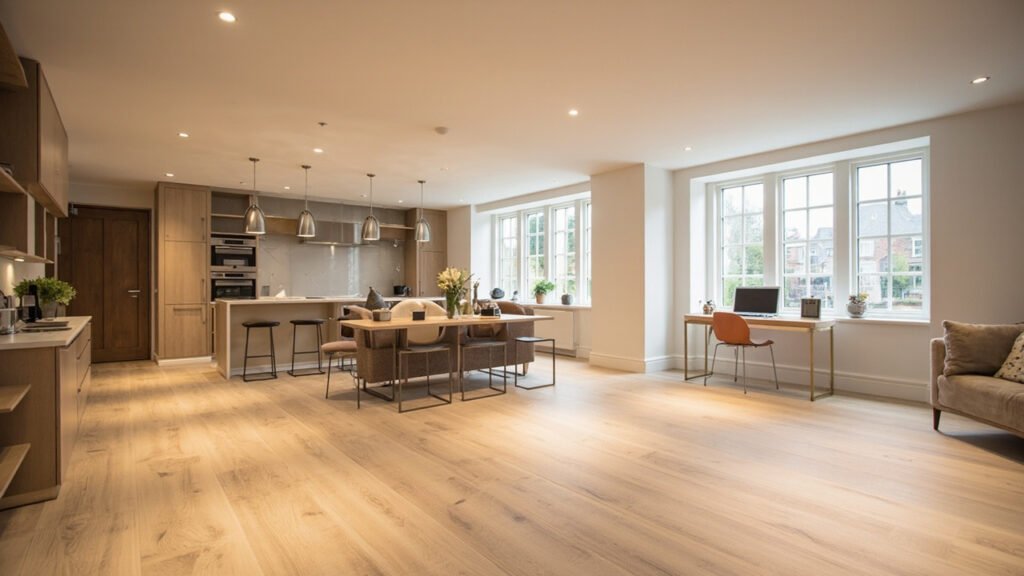
More homeowners in Greater Boston are discovering that their basement holds untapped potential. Whether you have been working from your kitchen table or have outgrown a spare bedroom, converting your basement into a dedicated home office can dramatically improve your focus, productivity, and work-life balance. At Basement Finishing of Boston, we specialize in transforming below-grade spaces into beautiful, functional rooms that meet the unique demands of Boston-area homes.
Why Consider a Basement Home Office?
Basements offer several advantages as home office locations. They are typically separated from the main living areas, which means fewer distractions and better boundaries between work and family life. A basement office can also help you reclaim square footage on upper floors that might be better used as a bedroom, playroom, or guest area. For homeowners in communities like Newton, Wellesley, Lexington, and Brookline, where home office space is increasingly essential, a finished basement can add significant value to your property.
That said, finishing a below-grade space in an older Greater Boston home comes with its own set of considerations. Let us walk you through the key ideas and requirements you should know before getting started.
Start with Proper Moisture Management
Moisture is the single most important factor to address in any basement finishing project. Boston’s climate, with its humid summers and cold, wet winters, puts extra stress on below-grade walls and floors. Before any framing or finishing begins, we recommend a thorough assessment of your foundation walls and floor.
Key moisture-ready steps include:
- Installing a dimple membrane or waterproofing system on foundation walls
- Ensuring proper exterior drainage and gutter extensions away from the foundation
- Sealing any visible cracks in the concrete floor or walls
- Adding a sub-slab vapor barrier beneath your new flooring
- Choosing mold-resistant insulation, such as closed-cell spray foam or rigid foam board
Addressing moisture proactively protects your investment, safeguards your health, and ensures your new office stays comfortable year-round.
Managing Ceiling Height in Older Boston Homes
One of the most common challenges in finishing a basement in Greater Boston is ceiling height. Many homes built in the early-to-mid 20th century in neighborhoods like Westwood, Weston, Bedford, and Quincy were constructed with basements that have lower clearances than modern building codes allow for habitable rooms. If your existing ceiling height is marginal, you have a few options worth considering.
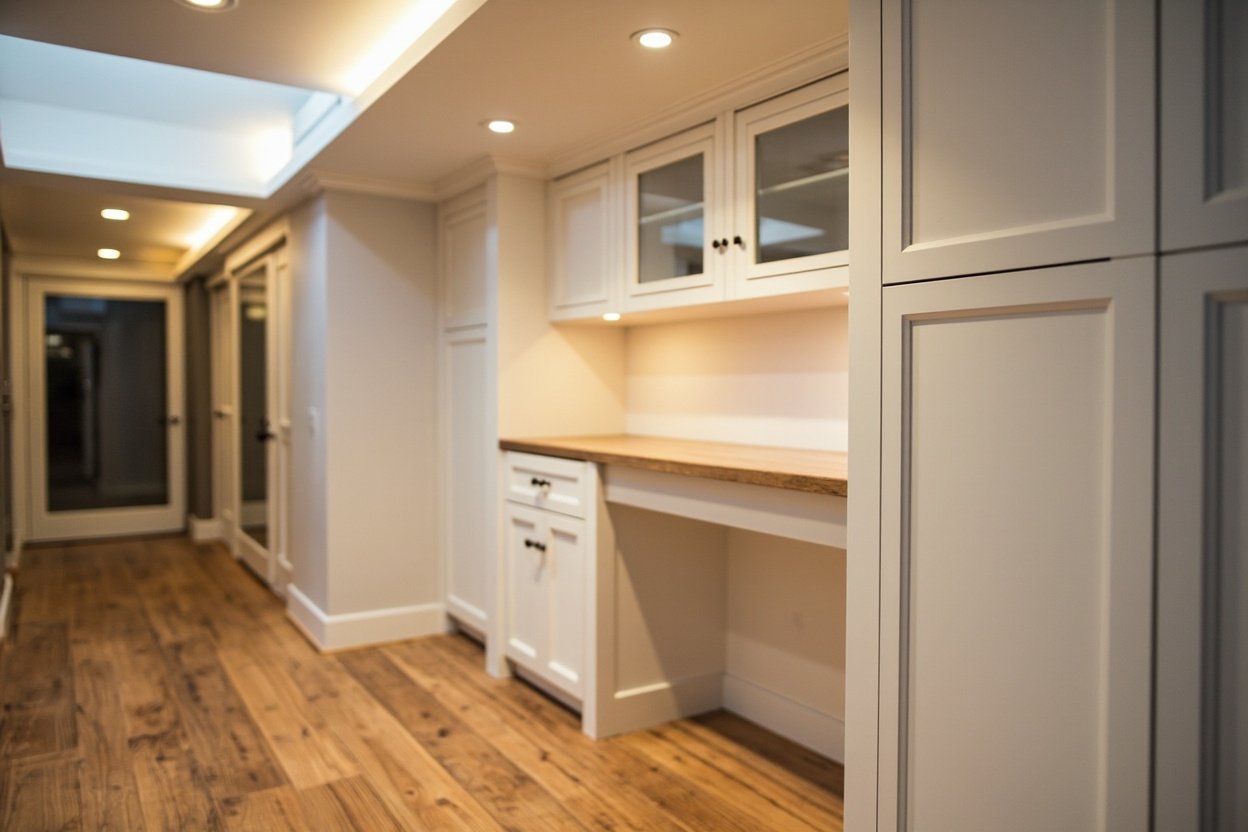
You might lower the visual impact of beams or ductwork with creative soffit designs that also house recessed lighting or wiring. Alternatively,glue-nail drywall ceilings or drop ceiling panels can help you avoid the bulk of a traditional framed ceiling. In some cases, replacing old ductwork with compact, high-velocity HVAC systems can reclaim several inches of headroom. During your estimate, we will measure your space and walk you through the best approach for your specific home and layout.
Design Ideas for a Productive Basement Office
Once the structural and environmental work is in place, it is time to think about how your office will look and function. Here are some popular basement home office ideas our team has delivered for homeowners across the Greater Boston area.
Zoning and Layout
Separate your workspace from any other basement functions using partial walls, glass partitions, or distinct flooring areas. If your basement also serves as a family room or guest suite, creating a dedicated zone for work helps maintain focus even when other household activities are happening nearby.
Lighting That Works for All Day
Basements lack natural light, so your artificial lighting plan matters enormously. We recommend layering three types of lighting:
- Ambient lighting: Recessed LED can lights or flush-mount fixtures for overall illumination
- Task lighting: Under-cabinet or desk-mounted lights for focused work
- Accent lighting: Wall sconces or LED strips to add warmth and reduce the cave-like feeling common in below-grade spaces
If your budget allows, adding an egress window or window well with a clear glass cover can introduce natural light and make your office feel dramatically more open and inviting.
Flooring That Stands Up to Below-Grade Conditions
Luxury vinyl plank, or LVP, is one of our most frequently recommended flooring options for basement offices. It is waterproof, durable, comfortable underfoot for long workdays, and available in styles that convincingly mimic hardwood or stone. Tile is another excellent option, especially if you plan to include a small kitchenette or wet bar in your office suite.
Essential Trade Work: Electric and Plumbing
A well-designed basement office needs more than just good aesthetics. Your contractor should coordinate licensed electricians for dedicated circuits, plenty of outlets, and data wiring to support reliable internet connectivity. Older homes in Needham, Acton, and Natick often have outdated electrical panels that may need upgrading to handle the additional load.
If you are considering adding a basement bathroom, small wet bar, or kitchenette to your office space, licensed plumbers must handle all rough-in and fixture work. At Basement Finishing of Boston, our in-house team coordinates these trades directly, keeping communication clear and your project on schedule.
Budgeting for Your Basement Office Build-Out
Every basement finishing project is unique, and the final cost depends on your existing space conditions, the scope of finish work, and the features you want to include. Rather than giving you a generic range that may not reflect your home, we prefer to visit your space, assess the conditions, and provide a detailed, no-obligation estimate tailored to your goals. This ensures you only pay for what your specific project requires.
Getting Started with Your Basement Home Office
Converting your basement into a productive, comfortable home office is one of the best investments you can make in your home and your work life. From moisture management and ceiling height solutions to lighting design and trade coordination, planning matters at every stage.
Ready to transform your basement? Visit our basement finishing page or call (857) 666-8643 for a Free, no-obligation estimate
When planning your basement home office ideas, focus on proper scope definition, moisture management, and selecting materials suited for below-grade spaces.