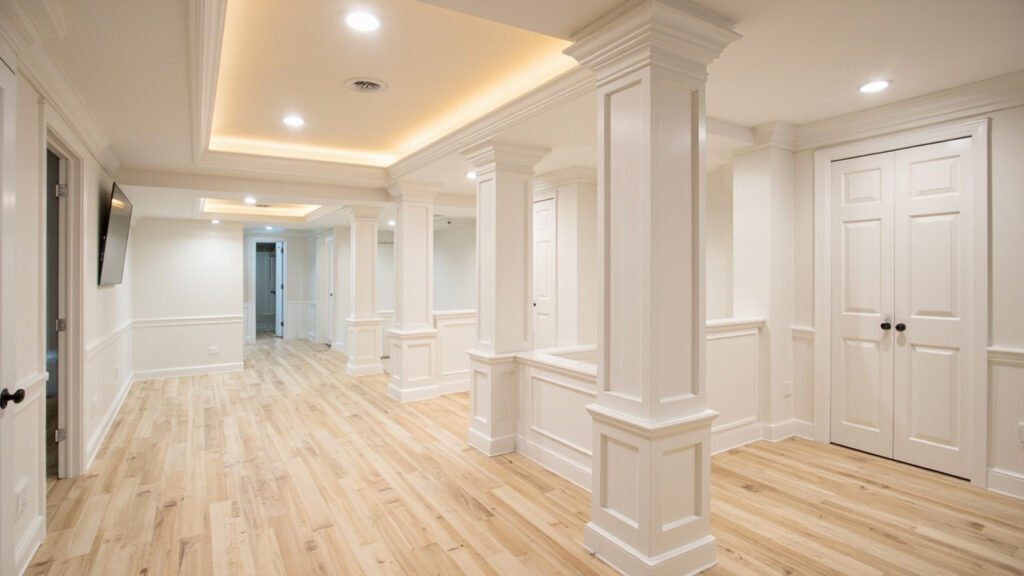
Basements often sit unused or become a catch-all for storage, but they offer incredible potential—especially when you have kids. With a little planning and professional finishing work, your basement can become the most popular room in your home. Below are practical basement playroom ideas tailored to Greater Boston homes, where older foundations, moisture concerns, and ceiling height are common realities.
Start With the Basics: Moisture and Code Compliance
Before you pick paint colors or furniture, you need a dry, code-compliant space. Boston-area homes—particularly those in Newton, Lexington, and Wellesley—were built decades ago, and many have foundations that weren’t designed with modern basement finishing in mind.
- Moisture management: We recommend waterproofing or moisture-barrier systems before framing. Even in homes without obvious water intrusion, below-grade walls can wick humidity. Proper insulation and vapor barriers make a big difference.
- Egress requirements: If your basement will be used as a living space—especially a playroom where kids spend time—a proper egress window or exit is typically required. We handle egress window installation as part of our finishing process.
- Ceiling height: Older basements often have lower ceilings. We can work with drop ceilings, furring strips, or thin-profile lighting to maximize headroom while keeping mechanicals accessible.
These aren’t optional extras—they’re the foundation of a safe, comfortable play space that will last.
Zone Your Layout for Different Ages and Activities
One of the best basement playroom ideas is to create distinct zones. A well-designed layout keeps things organized and makes the space usable for everyone.
- Active play zone: Open floor space for running, building with blocks, or a small indoor basketball hoop. Durable LVP flooring holds up to roughhousing and is easy to clean.
- Creative corner: A dedicated art station with easy-to-clean surfaces, good lighting, and storage for supplies. Consider a small sink or a washable floor mat nearby.
- Reading or calm zone: A soft rug, bean bag chairs, and built-in shelving for books. This gives kids a quiet retreat within the larger play space.
- STEM or gaming station: A wall-mounted shelf for computers or tablets, task lighting, and proximity to electrical outlets. We can plan outlet placement during the rough-in stage.
Lighting That Works for Play
Basements don’t have windows, which means lighting needs to do heavy lifting. Overhead fixtures alone create harsh shadows. The best basement playroom ideas incorporate layered lighting:
- Recessed LED cans: Bright, even general lighting for safety and visibility.
- Wall sconces or LED strips: Add warmth and can double as nightlights for younger kids.
- Dimmer switches: Let you shift from bright play mode to a cozy movie-night vibe.
All electrical work is handled by our licensed electricians, so wiring is done to code and safely distributed throughout the space.
Storage Solutions That Keep the Clutter Down
Kids come with a lot of stuff. Built-in storage is one of the smartest basement playroom ideas because it uses vertical space efficiently and keeps the floor open for play.
- Built-in cubbies: Perfect for bins, baskets, and labeled toy organization. Kids can clean up independently.
- Wall-mounted shelving: Display books, games, or artwork without taking up floor space.
- Closet or mudroom-style entry: A small entry area at the stairs keeps shoes, backpacks, and seasonal gear from spreading into the play zone.
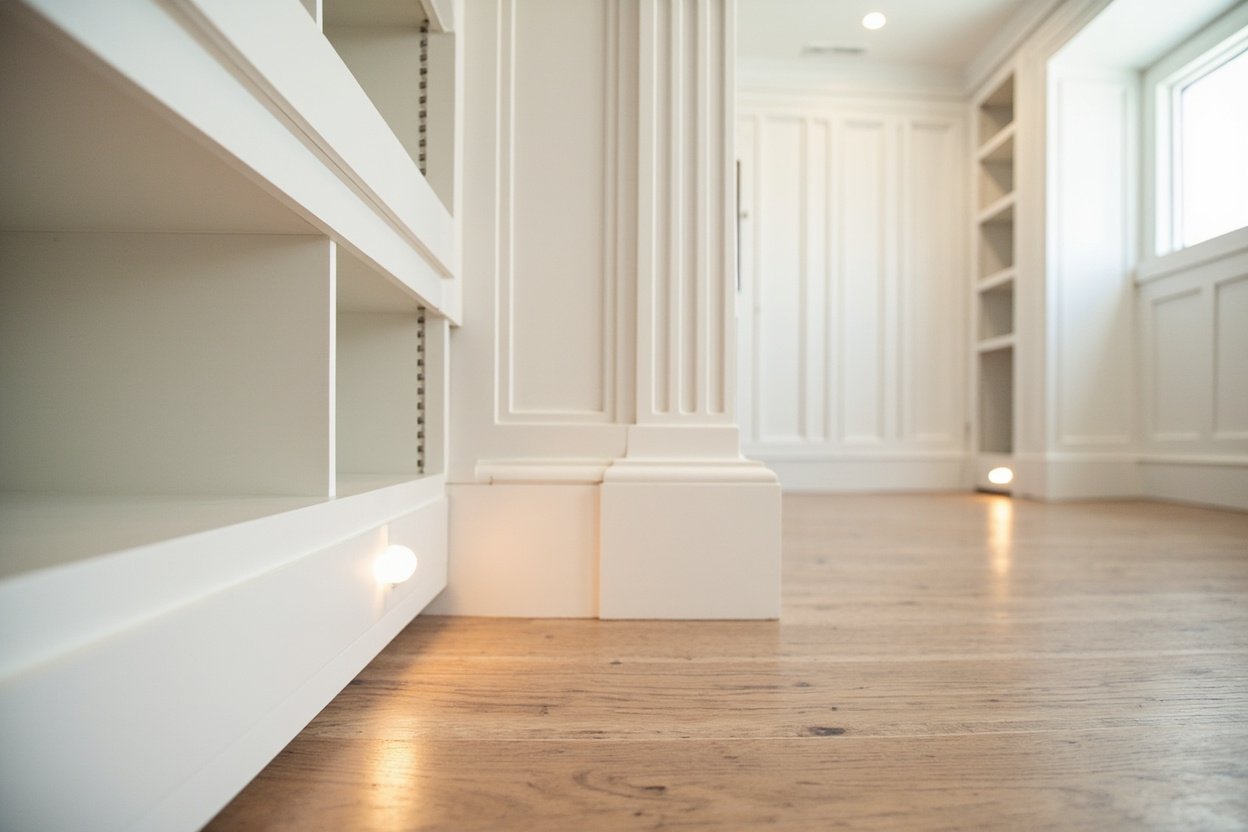
During framing, we can build custom alcoves and shelving recesses directly into the walls—cleaner lines and more usable space than furniture alone.
Materials That Stand Up to Real Life
Basement playrooms need materials that can handle moisture, scuffs, and the occasional spill. Here’s what we typically recommend:
- Flooring: Luxury vinyl plank (LVP) is our go-to for basement playrooms. It’s water-resistant, durable, warm underfoot, and comes in wood-look styles that look great without the maintenance of hardwood.
- Walls: Moisture-resistant drywall (green board or paperless) in play areas, especially near exterior walls. We finish everything with a clean, paint-ready surface.
- Trim and doors: Painted trim and solid-core doors hold up better in variable humidity than delicate moldings.
Add a Bathroom for Maximum Convenience
One of the most practical basement playroom ideas that homeowners overlook is adding a basement bathroom. Trudging upstairs for bathroom breaks—especially during winter in Brookline or Westwood—quickly becomes a hassle. A small half-bath or full bath adds serious value and usability.
Our team coordinates licensed plumbers for rough-in and fixture installation, so the bathroom integrates seamlessly with the rest of your finished basement.
Make It Grow With Your Family
The best basement playroom ideas aren’t just for toddlers. Think about how the space can evolve:
- Teen hangout: A pool table, gaming setup, or lounge seating keeps teens downstairs instead of monopolizing the living room.
- Guest area: A convertible playroom with a pull-out sofa doubles as guest space when family visits from out of town.
- Homework station: A built-in desk area that works for crafts now and homework later.
Flexible layouts and durable finishes mean your investment works hard for years to come.
Ready to transform your basement? Visit our basement finishing page or call (857) 666-8643 for a Free, no-obligation estimate