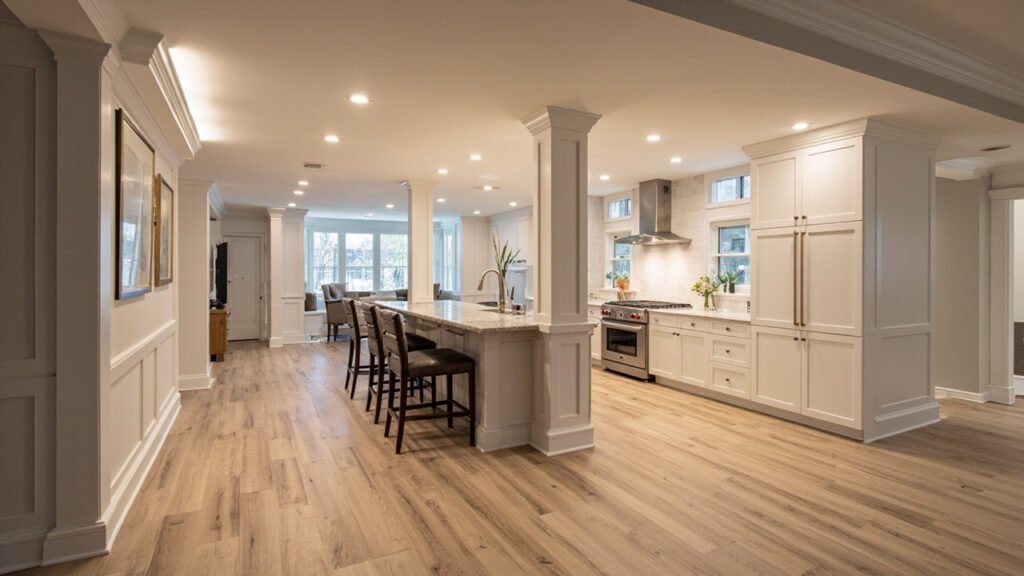
Adding a wet bar to your basement is one of the most popular upgrades for Greater Boston homeowners looking to increase living space and property value. Whether you envision a sleek entertainment area for game nights, a sophisticated spot for hosting friends, or a convenient station near your home theater, a basement wet bar installation can transform an underutilized space into the heart of your home.
Why Wet Bars Work So Well in Boston Basements
Boston-area homes are known for their character, but many older properties in Newton, Brookline, Lexington, and Wellesley have basements that sit largely unused. A basement wet bar is a smart way to reclaim that square footage. Since basements are naturally separate from the main living areas, a bar space does not disrupt daily household routines while still offering a dedicated spot for gatherings.
Wet bars also appeal to multigenerational households common across communities like Wayland, Weston, and Acton. A guest suite or in-law apartment with its own wet bar adds convenience and privacy for both residents and visitors.
Key Planning Considerations for Your Basement Wet Bar
Before any work begins, thoughtful planning ensures your wet bar functions well for years to come. Here are the primary factors to consider:
- Water supply and drainage: Wet bars require both cold and hot water lines plus a drain connection. Proximity to existing plumbing in your basement bathroom or utility area keeps costs manageable.
- Electrical needs: You will need dedicated circuits for refrigeration, lighting, and any beverage dispensers. Our licensed electricians handle all wiring to code.
- Cabinet and countertop selections: Moisture-resistant materials are essential in below-grade spaces. We recommend marine-grade plywood cabinetry and quartz or solid-surface countertops that resist the humidity common in Boston basements.
- Backsplash and flooring: Tile backsplashes and luxury vinyl plank (LVP) flooring near the wet bar area handle spills and moisture better than standard materials.
Moisture Management: A Boston Basement Essential
Managing moisture is the single most important consideration for any basement finishing project in Greater Boston. Our region experiences high humidity in summer and freeze-thaw cycles in winter, both of which can challenge below-grade spaces.
During your wet bar installation, we address moisture on multiple fronts:
- A thorough inspection of foundation walls and floors before any framing begins
- Installation of dimple membrane or equivalent moisture barriers where appropriate
- Proper insulation using moisture-resistant products like closed-cell spray foam or rigid foam boards against foundation walls
- Ductwork sealing and dehumidification sizing to maintain consistent humidity levels
- Ventilation upgrades to ensure fresh air circulation in the bar and surrounding areas
These steps protect your investment and keep your wet bar looking great season after season.
Ceiling Height and Layout Solutions
Older Boston-area homes frequently have basement ceiling heights below modern standards. If your basement has less than seven feet of clearance, we have options:
- Dropped ceiling tiles: Allow easy access to wiring and pipes while providing a finished look
- Showerhead-height ceilings: We can create a visually open feel by dropping the ceiling only in certain zones
- Open-beam or coffered designs: Give the illusion of height while adding architectural interest
- Egress window wells: If your basement lacks proper escape routes, adding egress windows improves safety and brings in natural light—often a requirement for guest suites and in-law apartments
Customization Options to Match Your Style
Every homeowner has a different vision. Your basement wet bar can range from a simple under-counter station with a sink and mini-fridge to a full-featured bar with custom cabinetry, wine storage, a beverage center, and statement lighting. Common add-ons we install include:
- Built-in wine coolers or beverage refrigerators
- Undermount sinks with brushed nickel or matte black fixtures
- Recessed lighting, pendant fixtures, or LED strip accents
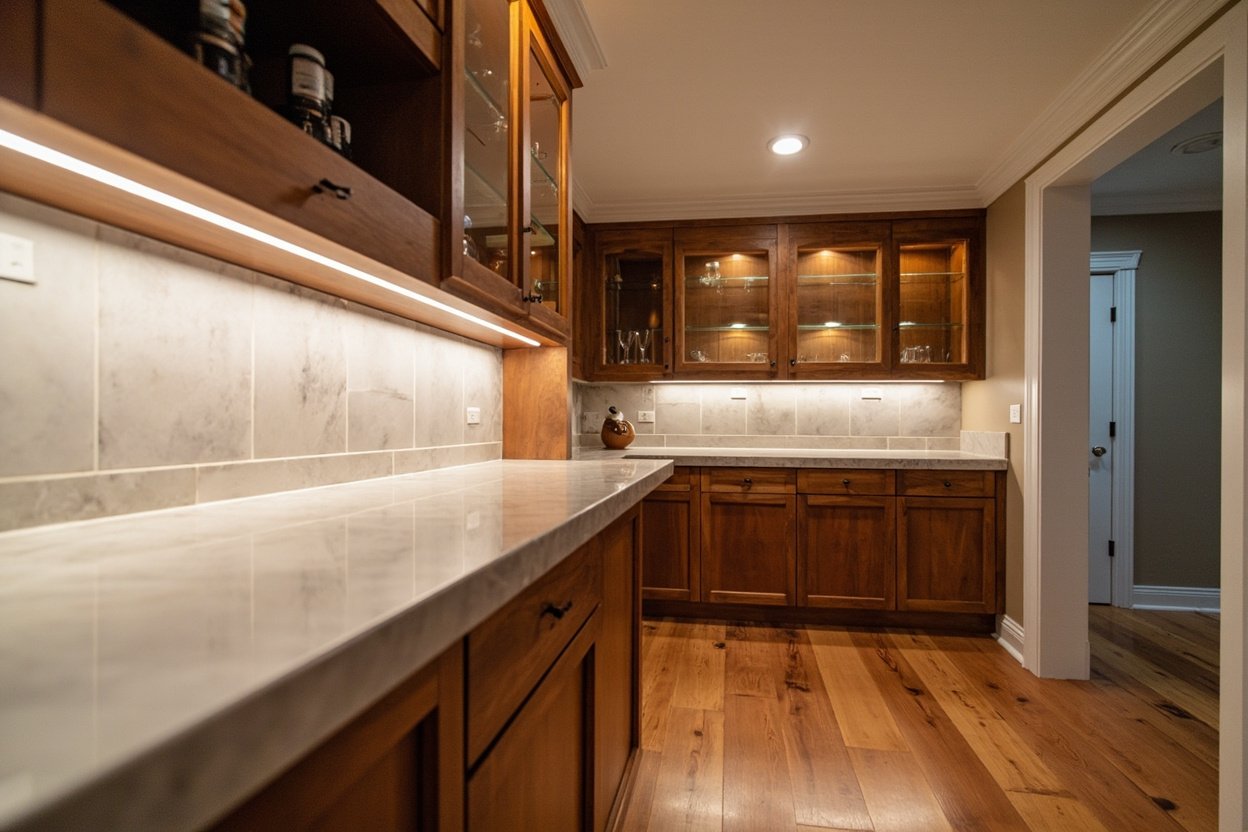
- Glass-front cabinetry with integrated lighting
- Water filtration systems for cleaner drinking water
- Connected smart controls for lighting and beverage dispensers
We frame every project to your lifestyle. A family-focused basement in Braintree might prioritize durable finishes and ample counter space, while a homeowner in Brookline designing an entertainment suite may lean toward upscale finishes and ambient lighting.
The Installation Process: What to Expect
Our team brings a structured, transparent approach to every basement wet bar installation. Here is a general overview of how your project unfolds:
- Initial consultation: We visit your home, assess the basement space, discuss your vision, and identify any plumbing, electrical, or structural challenges.
- Design and material selection: We create a detailed scope that covers layout, cabinetry, countertops, plumbing rough-in, and finishing details.
- Permit coordination: We handle permit applications for plumbing and electrical work across all Greater Boston municipalities.
- Construction: Our crews manage demo, framing, insulation, plumbing rough-in, electrical rough-in, drywall, trim, and painting.
- Final inspections: Licensed electricians and plumbers complete trade work, and we schedule all required inspections.
- Finishing touches: Countertops, cabinet hardware, lighting fixtures, and any specialty items are installed. We clean the space thoroughly before walkthrough.
Throughout the process, you receive clear communication from a dedicated point of contact. We maintain organized, clean job sites because we know your family still lives in the home during construction.
Ready to transform your basement? Visit our basement finishing page or call (857) 666-8643 for a Free, no-obligation estimate
When planning your basement wet bar installation, focus on proper scope definition, moisture management, and selecting materials suited for below-grade spaces.