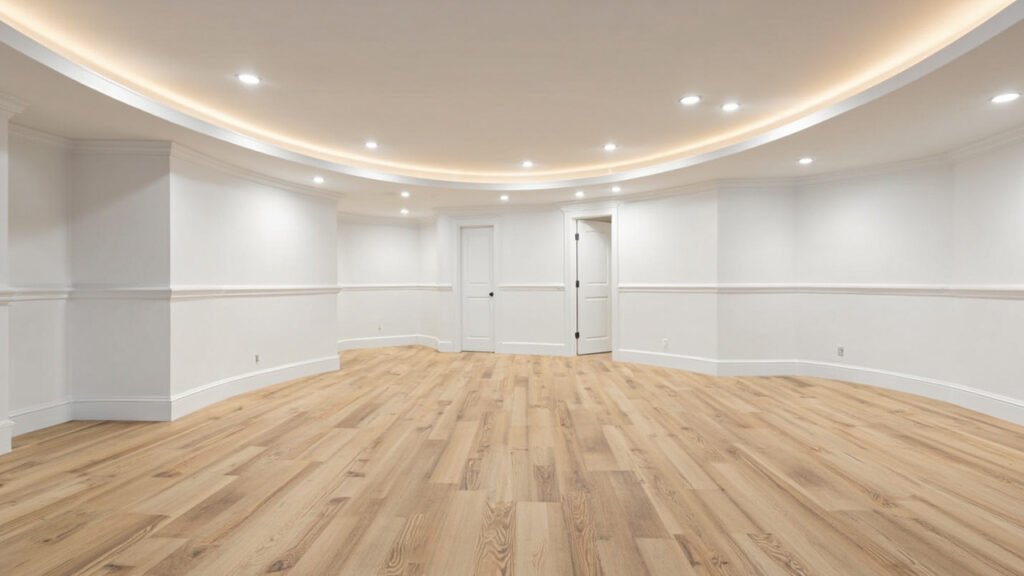
If you own a home in Greater Boston, your basement represents one of the most valuable untapped spaces in your property. Finishing this below-grade area can add significant living space, increase your home’s value, and transform how your family uses your home. However, understanding the cost to finish a basement in Boston requires careful consideration of local building codes, older home construction, and the unique challenges that come with finishing below-grade spaces in New England.
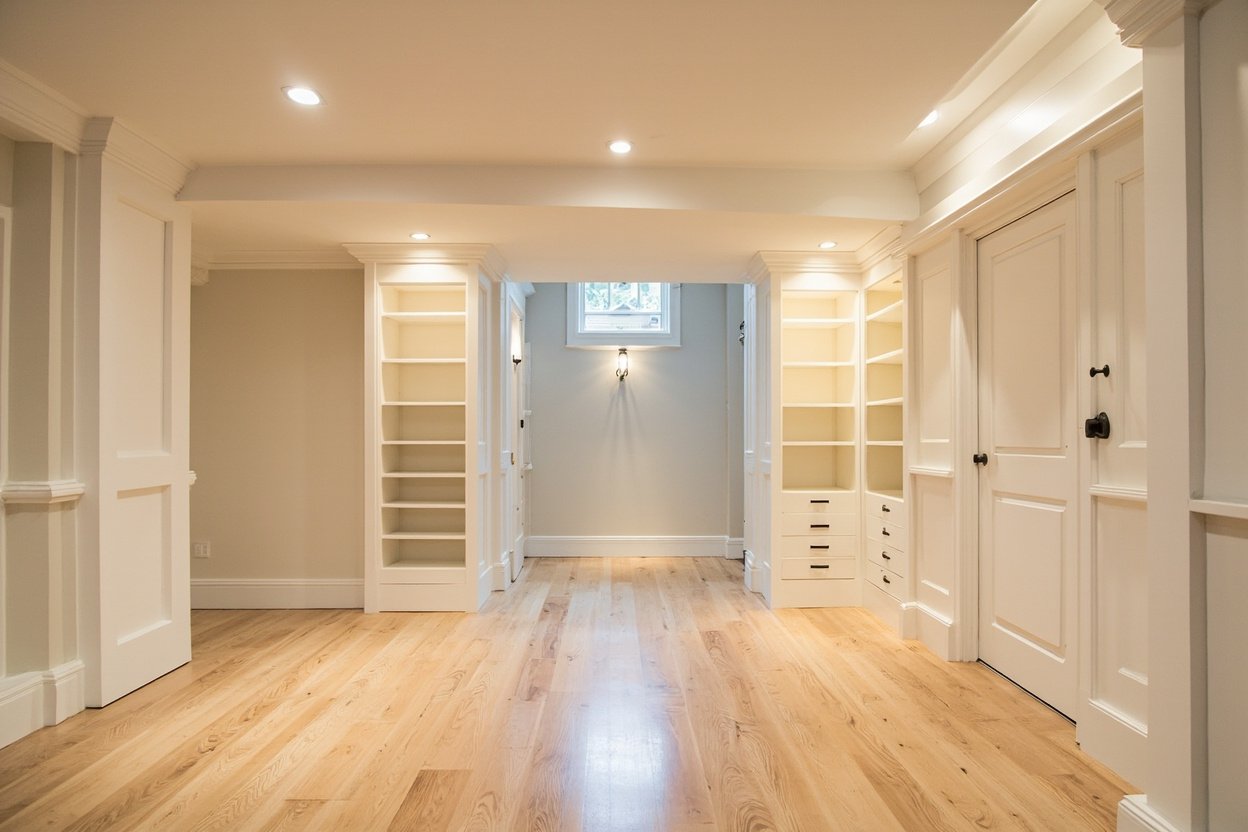
What Impacts the Cost to Finish a Basement in Boston
Several factors determine the overall investment required to finish your Boston-area basement. The size of your space is the primary driver, but numerous other considerations come into play when calculating basement finishing costs.
Key factors that affect your project cost include:
- Current condition of the basement and any existing water issues
- Ceiling height and whether your basement meets minimum height requirements
- Extent of electrical and plumbing work needed
- Quality of existing foundation and any necessary repairs
- Access to the basement via stairs and whether egress upgrades are required
- Your choice of materials and finishes
Every basement in the Boston area has its own characteristics. Older homes in Newton, Lexington, and Wellesley often have unique structural considerations, while newer construction in communities like Westwood and Wayland may offer more straightforward finishing conditions. A thorough site assessment is essential before providing any estimate.
Understanding the Scope of Basement Finishing Work
Professional basement finishing involves much more than simply painting walls and laying flooring. At Basement Finishing of Boston, we approach every project with a comprehensive scope that addresses the unique requirements of below-grade spaces.
Typical basement finishing scope includes:
- Demolition of existing finishes and preparation
- Framing walls to code with proper blocking
- Installing insulation rated for below-grade conditions
- Hanging and finishing drywall
- Installing appropriate flooring such as luxury vinyl plank or tile
- Painting walls and trim work
- Installing ceiling solutions that accommodate ductwork and pipes
- Adding adequate lighting and electrical outlets
- Working with licensed electricians for any new circuits
Boston basements often require specialized attention to moisture management. The humid summers and cold winters in Massachusetts create conditions where proper vapor barriers, dehumidification systems, and appropriate material selection become critical to long-term success.
Boston-Specific Considerations for Your Basement Project
Finishing a basement in Greater Boston presents unique challenges that homeowners in other regions may not face. Understanding these considerations helps set realistic expectations for your project.
Older Home Basements: Many homes in Brookline, Newton, and Lexington were built in the early 20th century. These properties often have stone foundations, limited headroom, and unconventional layouts that require creative solutions. Our team has extensive experience working with historic New England construction.
Ceiling Height Requirements: Boston-area building codes typically require a minimum ceiling height of 7 feet for habitable spaces. Some older basements fall short of this requirement, necessitating either excavation or alternative design approaches such as dropped ceilings that strategically work around ductwork.
Egress Requirements: If you plan to create a bedroom or sleeping area in your finished basement, proper egress windows are mandatory. This involves cutting into your foundation, installing proper wells, and ensuring emergency exit capability. This is a critical safety requirement that affects both cost and layout planning.
Moisture Management: The water table in parts of Greater Boston, combined with seasonal freeze-thaw cycles, means that moisture management cannot be an afterthought. We recommend and install proper exterior and interior drainage solutions, vapor barriers, and dehumidification systems as part of our standard approach to finishing below-grade spaces.
Common Basement Configurations and Their Considerations
Greater Boston homeowners pursue basement finishing for various purposes. The intended use of your space influences both the scope of work and the overall investment.
Popular basement configurations include:
- Family room or entertainment space
- Home office or study area
- Home gym or exercise room
- Guest suite or in-law apartment
- Home theater or media room
- Wet bar or kitchenette area
Adding a basement bathroom involves additional plumbing work but significantly enhances the usability of your space. Our team coordinates with licensed plumbers to ensure all work meets local codes and functions reliably for years to come.
Setting Realistic Expectations for Your Basement Finishing Budget
While every project is unique, understanding general cost ranges helps Boston homeowners plan accordingly. The cost to finish a basement typically ranges based on the scope and condition of your space.
Factors that influence where your project falls on the cost spectrum include the items discussed earlier: existing conditions, the extent of electrical and plumbing work, and your finish material selections. Premium finishes and complex layouts naturally increase the investment, while more straightforward projects with standard finishes cost less.
To get an accurate understanding of your project’s cost, consider scheduling an in-home consultation. This allows our team to assess your specific basement, discuss your goals, and provide guidance based on your particular circumstances and the local Boston market.
Why Choose a Basement-Specialist Contractor
Basement finishing requires different expertise than typical room additions or whole-house remodels. Below-grade spaces present unique challenges related to moisture, structural considerations, and code requirements that general contractors may overlook.
At Basement Finishing of Boston, we focus exclusively on basement projects. This specialization means our teams understand the nuances of Boston-area foundations, moisture management for New England climates, and the most effective approaches for transforming dark basements into bright, usable living spaces.
Our process emphasizes:
- Clear communication throughout your project
- Clean, organized job sites
- Thorough scope documentation before work begins
- Coordination with licensed tradespeople for electrical and plumbing
- Attention to details that prevent moisture issues down the road
Ready to transform your basement? Visit our basement finishing page or call (857) 666-8643 for a Free, no-obligation estimate
When planning your cost to finish basement boston, focus on proper scope definition, moisture management, and selecting materials suited for below-grade spaces.