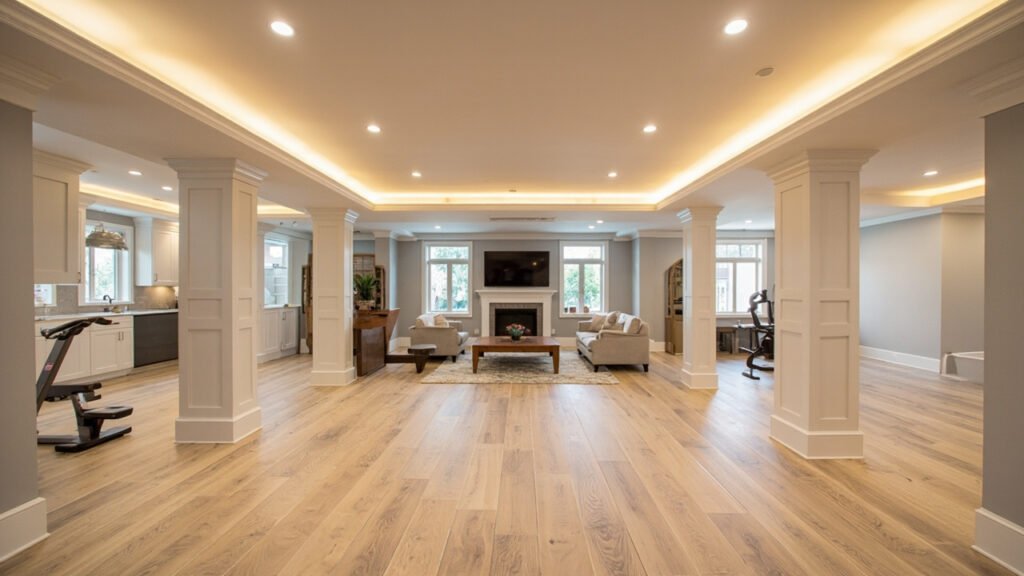
You’ve been working out in a cramped corner of your living room, dodging furniture and watching your weights take over the garage. Sound familiar? You’re not alone. More Greater Boston homeowners are discovering that their basement—yes, that often-overlooked space collecting boxes and forgotten holiday decorations—is actually the perfect spot for a dedicated home gym. Let’s walk through what it takes to make this happen, from handling Boston’s unique housing challenges to creating a workout space you’ll actually want to use.
Why Your Basement Is a Natural Fit for a Home Gym
Basements offer something precious in Greater Boston’s often pricey real estate market: square footage without the premium price tag. When you convert underutilized basement space into a gym, you’re essentially adding functional living area without expanding your home’s footprint. Your workout equipment finally has a home, you can exercise in privacy, and you eliminate the excuse of “too far to drive to the gym.” Plus, a well-finished basement gym adds genuine value to your home.
But basement gyms aren’t as simple as moving a treadmill downstairs. Boston-area basements come with their own set of considerations that can make or break your project. That’s where working with a basement-specialist contractor makes all the difference.
The Moisture Challenge: Boston’s Below-Grade Reality
Here’s the honest truth about Boston-area basements: they’re below grade, which means they’re surrounded by soil and groundwater. Older homes in Newton, Lexington, and Brookline especially may have foundations that weren’t designed with modern moisture management in mind. This creates a unique challenge that generic contractors often miss.
A basement home gym needs to be dry, comfortable, and free of the musty smell that plagues too many below-grade spaces. Your basement finishing specialist will evaluate several key factors:
- Current drainage around your home’s foundation
- Existing signs of moisture penetration or water intrusion
- Ventilation solutions appropriate for your home’s age and construction
- Insulation strategies that prevent condensation on cold surfaces
- Subfloor systems that allow any residual moisture to escape
Don’t skip this assessment. A gym built in a damp basement will leave your equipment rusty, your walls warped, and your motivation tanked. Professional moisture-aware finishing gives you a space that stays comfortable year-round.
Ceiling Height: Getting the Most Out of Your Space
One of the most common frustrations with basement spaces in Greater Boston’s older homes is ceiling height. Many historic homes in Wellesley, Weston, and Westwood have basements with beams, ductwork, and limited vertical clearance. This affects everything from your cardio equipment placement to whether you can comfortably do overhead exercises.
Experienced basement finishers know how to work with these constraints creatively. Options include:
- Dropped ceiling systems that provide easy access to mechanicals while maximizing headroom
- Strategic placement of equipment in areas with the most clearance
- Creative soffit designs that add architectural interest while hiding ductwork
- Low-profile flooring solutions that don’t eat up precious inches
During your estimate, we’ll measure your space honestly and help you understand what gym configuration works best for your ceiling constraints.
The Full Scope: What Basement Gym Finishing Actually Involves
You might think finishing a basement gym means throwing up some drywall and calling it done. In reality, a professional basement gym finish involves multiple trade specialties working in coordination. Here’s what typically goes into the project:
- Structural assessment and demo: Removing old finishes, evaluating existing conditions, addressing any foundation concerns
- Framing: Creating the walls, soffits, and structural modifications needed for your layout
- Insulation and vapor barriers: Keeping the space temperature-stable and moisture-resistant
- Electrical: Adding circuits for your treadmill, elliptical, lighting, and any other equipment—this is where licensed electricians matter
- HVAC adjustments: Extending heating and cooling to keep your gym comfortable in all seasons
- Drywall and finishing: Creating smooth, paint-ready walls in your chosen colors
- Flooring: Installing rubber gym flooring, LVP, or tile depending on your aesthetic and budget
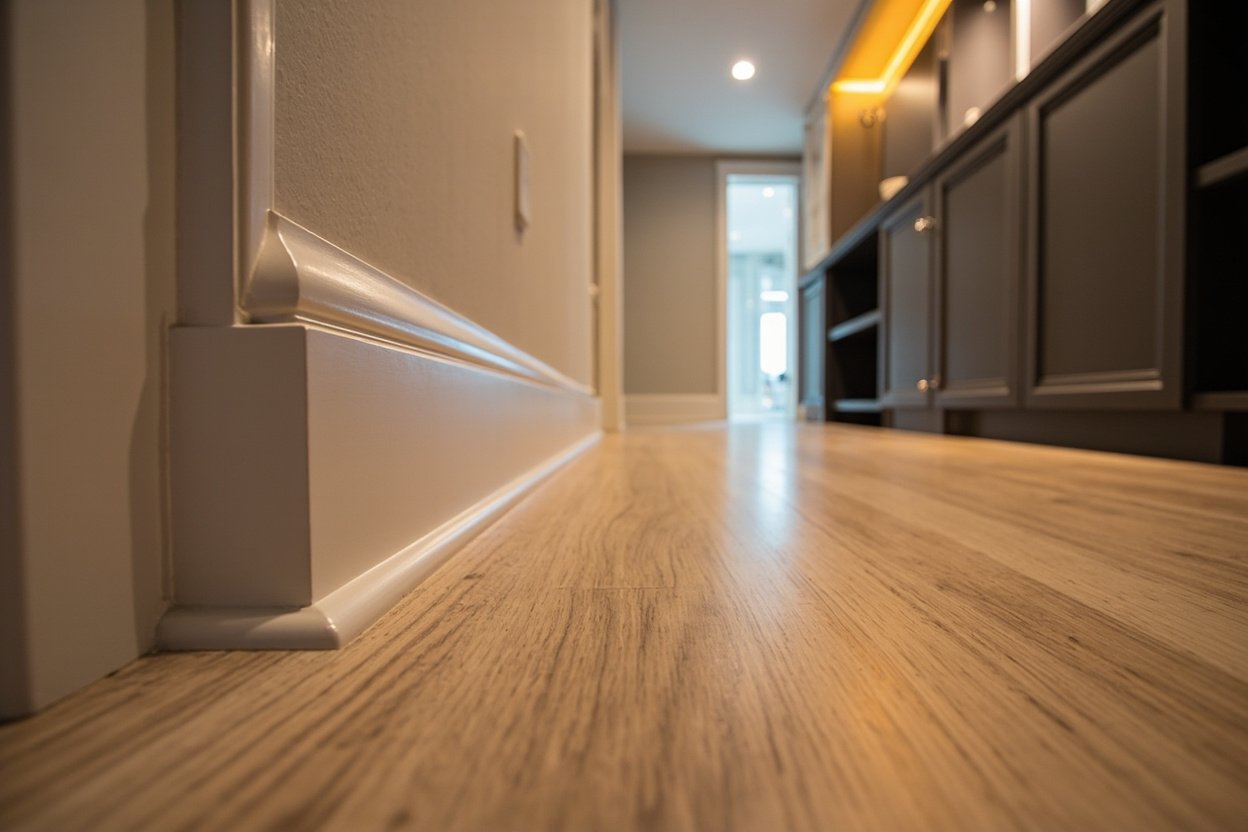
- Lighting and trim: The details that make your gym feel intentional rather than afterthought
Egress Requirements and Safety Considerations
Here’s something many homeowners don’t realize: if your basement is being converted into a livable space, building codes likely require proper egress—meaning a way out that isn’t just the stairs. This is especially important in a home gym where you might be exercising alone.
Egress windows or doors aren’t just code compliance; they’re genuine safety features. Your basement finishing contractor can explain what’s required for your specific town (requirements vary between Wellesley and Quincy, for example) and what options work best for your space and budget.
Making It Yours: Customizing Your Basement Gym
Beyond the basics, this is your chance to create a workout space that matches how you actually train. Think about what makes sense for your routine:
- Rubber flooring versus foam tiles for your specific activities
- Mirrors for form-checking and making the space feel larger
- Dedicated strength training zones versus open space for functional movement
- Climate control options for comfort during winter workouts in unheated basements
- Audio/video wiring for music or streaming workouts
- Storage for weights, mats, and equipment off the workout floor
Some homeowners also opt for basement bathroom additions to complete their gym suite—a shower right after a morning workout is surprisingly convenient. We can handle that plumbing work too through licensed professionals.
Getting Started: The Free Estimate Process
Every basement is different, and every homeowner’s vision is unique. The best way to understand what’s possible in your space is a conversation with our team. We start with an on-site assessment where we’ll:
- Evaluate your basement’s current condition and moisture situation
- Discuss your workout goals and equipment plans
- Review code requirements specific to your municipality
- Walk through material options and layout possibilities
- Provide a clear scope with no hidden surprises
We’ll handle the heavy lifting on permits and coordination, so you can focus on the exciting part: planning your new workout space.
Ready to transform your basement? Visit our basement finishing page or call (857) 666-8643 for a Free, no-obligation estimate
When planning your basement home gym contractor, focus on proper scope definition, moisture management, and selecting materials suited for below-grade spaces.