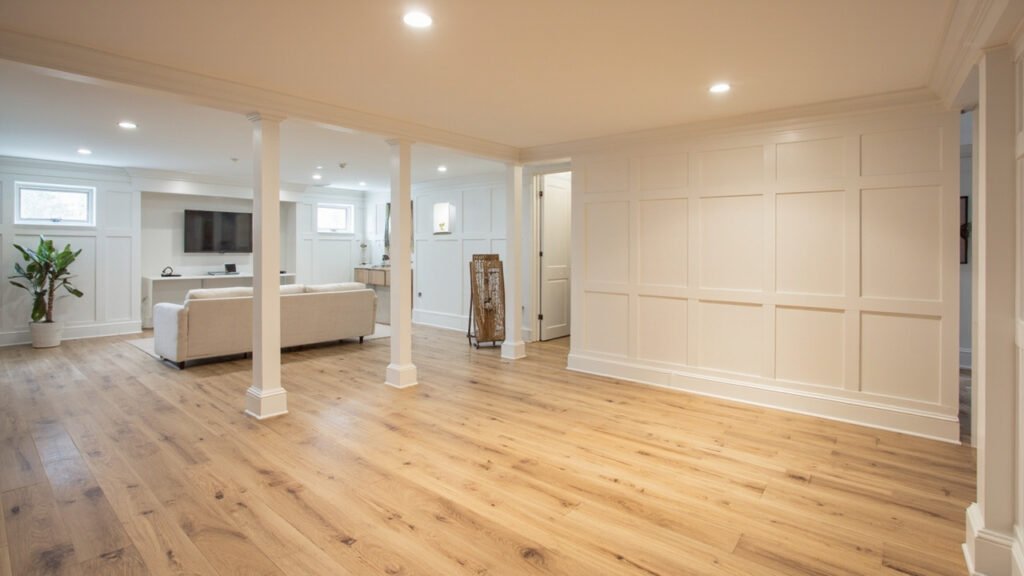
Working from home has become the norm for many Greater Boston professionals, and a well-designed basement home office can give you the dedicated workspace you need without sacrificing your living areas. Whether you are in a Newton colonial, a Brookline Victorian, or a newer home in Quincy, transforming your below-grade space into a productive office requires thoughtful planning. Here are the top basement home office ideas to help you create a workspace that actually works.
1. Start With Proper Moisture Management
Before you think about paint colors or desk placement, moisture control is the foundation of any successful basement home office in Greater Boston. Our New England climate brings humid summers and cold winters, and below-grade spaces are particularly susceptible to moisture intrusion. Professional basement finishing addresses this with proper vapor barriers, insulation, and dehumidification systems designed for Boston-area homes.
A dry basement protects your electronics, documents, and health. Look for basement finishing specialists who understand regional climate challenges and use moisture-resistant materials throughout the build.
2. Maximize Natural Light With Egress Windows
One common challenge in basement offices is the lack of natural light. Adding egress windows does double duty—they meet safety code requirements for basement bedrooms or living areas while flooding your workspace with daylight. Many towns in our service area, including Lexington, Wellesley, and Natick, have specific requirements for egress window installation that a professional contractor can navigate.
Consider placing your desk near newly installed egress windows for the best natural light exposure. Supplement with strategically placed artificial lighting to maintain proper illumination throughout the workday.
3. Address Ceiling Height Strategically
Ceiling height is a frequent concern in basement spaces, especially in older homes throughout Brookline, Westwood, and Weston where basements may have lower clearance. Creative solutions include dropped ceilings with recessed lighting, exposed industrial finishes, or coffered ceiling designs that add visual interest without consuming precious headroom.
Our team evaluates your basement’s structure early in the planning process. We can often adjust framing or suggest lighting solutions that make the space feel more open and professional.
4. Plan Your Layout for Productivity
A productive basement home office needs thoughtful zone planning. Consider these essential elements when designing your layout:
- Primary work zone: Place your main desk and computer setup away from high-traffic areas and noise sources
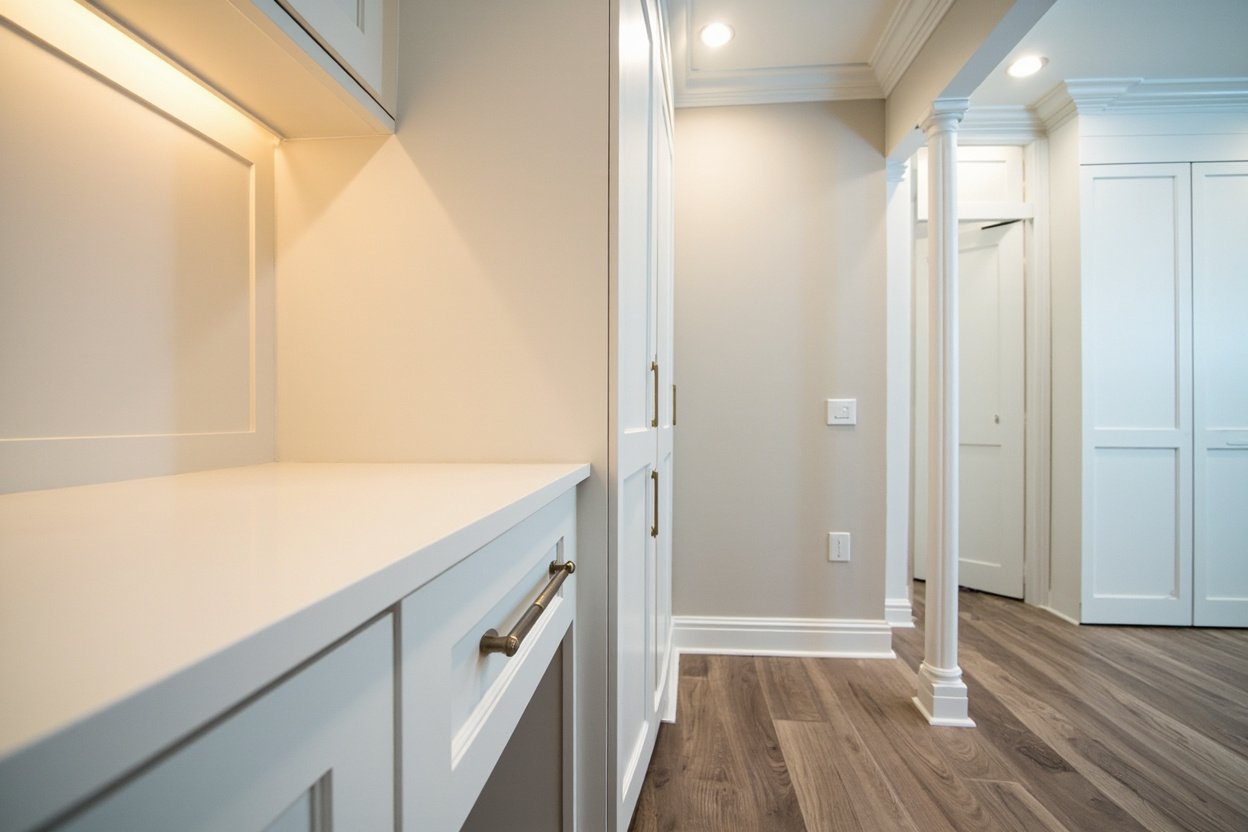
- Storage solutions: Custom built-in cabinets keep supplies organized without wasting floor space
- Meeting corner: A small seating area for video calls separates work time from living time
- Equipment zone: Designate space for printers, routers, and other tech without cluttering your main work area
- Backdrop area: For video calls, create a clean, professional-looking wall or bookshelf display
Separating these zones visually helps you transition mentally between tasks and maintains work-life boundaries even when your office is steps from your living room.
5. Choose Moisture-Resistant Finishes
Not all finish materials are suitable for below-grade spaces. Our basement finishing process includes guidance on materials that withstand Boston moisture levels while looking professional:
- Flooring: Luxury vinyl plank (LVP) and ceramic tile perform well in basements and resist moisture damage
- Walls: Moisture-resistant drywall or cement board provides a solid base for paint or wallpaper
- Trim: Composite or PVC trim materials resist moisture absorption better than traditional wood
- Ceiling: Dropped ceilings with moisture-rated tiles offer easy access to wiring while handling humidity
These materials look great and hold up to the unique challenges of basement environments in our region.
6. Set Up Proper Electrical and Connectivity Infrastructure
A professional basement home office requires robust electrical and data infrastructure. Our licensed electricians handle outlet placement, dedicated circuits for computers and equipment, and proper grounding. For video calls and cloud work, reliable internet connectivity is essential—coaxial and ethernet cable routing during the finishing process ensures clean installation without visible cords.
Consider including USB charging stations at your desk, smart lighting controls, and adequate ventilation for electronics. These details make daily work life smoother and more efficient.
7. Add Climate Control and Ventilation
Basements tend to be cooler in winter and warmer in summer than above-grade spaces. Proper HVAC integration into your basement finishing project ensures consistent temperatures year-round. Options include extending existing ductwork, installing ductless mini-splits, or adding supplemental electric solutions.
Good ventilation prevents stale air buildup and protects both your health and your equipment from excessive humidity. A quality dehumidification system is particularly valuable during humid Massachusetts summers.
8. Create Visual Separation From Living Spaces
When your office shares square footage with family areas, visual and acoustic separation becomes important. French doors, sliding panels, or partial wall dividers create psychological boundaries that help you “arrive” at work each morning. Sound-absorbing materials in the ceiling and walls reduce echo during calls and contain noise within the office zone.
Even in open-plan basement spaces, thoughtful design elements help you maintain the professional mindset needed for productive work.
Ready to Build Your Basement Home Office?
Turning your Needham, Newton, or Wellesley basement into a productive home office involves careful planning around moisture, light, layout, and finishes. Our team handles every aspect from framing through final trim, working with licensed electricians and plumbers as needed for comprehensive basement finishing.
Every Greater Boston home has unique challenges, and regional expertise matters. We understand local building codes, weather patterns, and the character of homes throughout our service area.
Ready to transform your basement? Visit our basement finishing page or call (857) 666-8643 for a Free, no-obligation estimate
When planning your basement home office ideas, focus on proper scope definition, moisture management, and selecting materials suited for below-grade spaces.