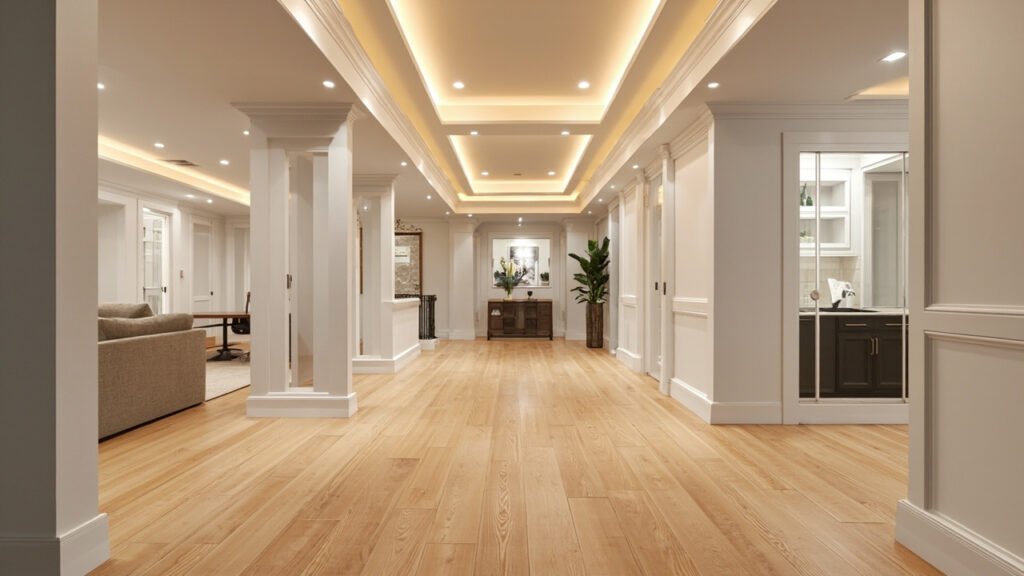
Your basement holds untapped potential. For homeowners across Greater Boston—from historic colonials in Lexington to mid-century homes in Newton—finishing your basement is one of the smartest ways to add livable square footage without the cost and hassle of a full home addition. Whether you dream of a cozy family room, a productive home office, or a private in-law suite, modern basement renovation ideas can turn that below-grade space into your home’s best feature.
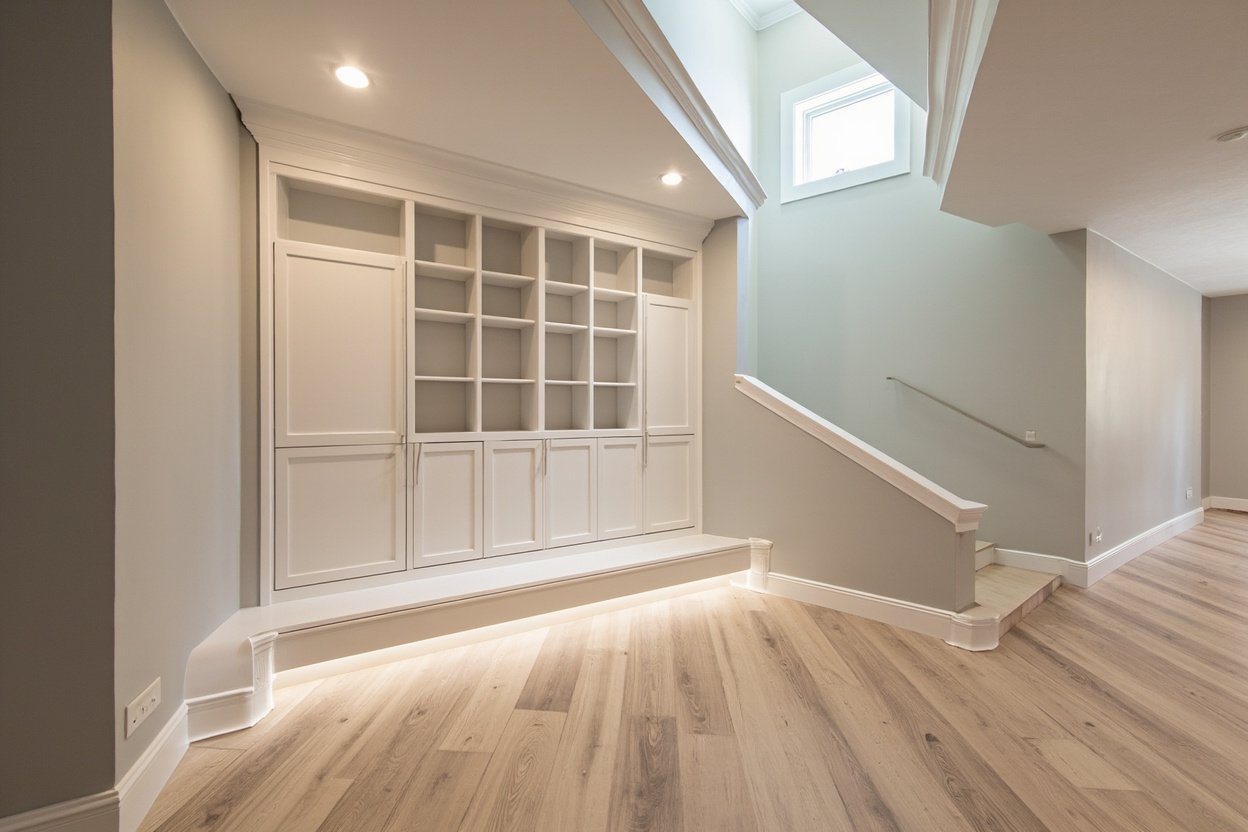
At Basement Finishing of Boston, we specialize in transforming basements in Needham, Wellesley, Brookline, Weston, and communities throughout the region. Our team handles every phase of basement finishing—from framing and insulation through to trim and lighting—creating spaces that are comfortable, code-compliant, and built to last. Here are the ideas and considerations that matter most when renovating a basement in the Greater Boston area.
Start With a Moisture-Aware Foundation
Boston-area homes range from century-old Victorians in Westwood to split-levels in Burlington, but nearly all have one thing in common: basements built below grade with varying conditions. Before any finishing work begins, addressing moisture is critical. Even a dry-seeming basement can harbor hidden humidity that leads to mold, warped drywall, and damaged flooring over time.
Modern basement renovation ideas begin with proper moisture management. We evaluate your foundation walls, check for water intrusion, and recommend solutions such as interior drainage systems, vapor barriers, and dehumidification. Insulating basement walls with rigid foam or spray foam—not fiberglass batts—creates a thermal barrier that performs better in below-grade conditions. This step protects your investment and ensures indoor air quality for whatever room you build.
Ceiling Height Solutions for Boston-Area Basements
Older Boston-area homes often have basement ceilings that feel low and cramped. One of the most impactful modern basement renovation ideas is choosing the right ceiling solution. Several approaches work well depending on your ceiling height and aesthetic goals:
- Dropped ceiling tiles provide easy access to plumbing and electrical, and today’s options include sleek, modern panels that look far better than dated acoustic tiles.
- Exposed joists with ductwork painting works well in homes where ceiling height is limited—cleaning and painting ductwork in a matte black or neutral tone gives an industrial-modern feel while preserving headroom.
- Drywall ceilings offer a clean, finished look but reduce ceiling height by several inches. For basements with adequate height, this provides the most polished result.
- Coffered or tray ceilings add architectural interest and can make a basement feel more like a true living space rather than a converted storage area.
For many Greater Boston homes, a dropped ceiling strikes the right balance—giving you access for future repairs while keeping the space open and comfortable.
Popular Basement Room Ideas for Boston Homes
Modern basement renovation ideas cover a wide range of uses. Your finished basement can serve one purpose or several, depending on your household’s needs. These are the most common projects we complete for homeowners in the Greater Boston area:
- Family rooms and entertainment spaces — Open layouts with durable luxury vinyl plank (LVP) flooring, recessed lighting, and built-in storage make ideal family hangout zones.
- Home offices — Dedicated workspaces with proper lighting, soundproofing considerations, and data wiring support remote work and study.
- Home gyms — Moisture-resistant flooring like rubber tiles or sealed concrete, plus proper ventilation, create an environment where workout equipment thrives.
- In-law suites and guest areas — These projects often include a basement bathroom, small kitchenette, and separate entrance—adding privacy and value.
- Home theaters — Acoustic panels, controlled lighting, and proper insulation make basement theaters surprisingly effective in below-grade spaces.
Each of these spaces benefits from the same core approach: quality insulation, moisture-resistant materials, and thoughtful lighting design.
Egress Windows and Code Compliance
For any basement room intended as a bedroom or living area, Massachusetts building codes require compliant egress—meaning a window or door large enough for an adult to exit safely in an emergency. Many finished basements in Boston suburbs were built before modern egress standards, so updating windows is often part of a modern basement renovation project.
Egress window installation involves cutting into your foundation, installing a well, and ensuring proper drainage. It adds natural light, improves ventilation, and makes your basement safer—particularly important if you’re creating a guest suite or rental unit. Our team coordinates licensed trades for all aspects of egress work, ensuring everything passes inspection.
Adding Value With Basement Bathrooms and Wet Bars
One of the most valuable modern basement renovation ideas is adding a basement bathroom. A full bath or half bath transforms your basement from a storage space into a fully functional living area, especially useful for in-law suites, guest rooms, or entertainment spaces. We work with licensed plumbers to handle all drainage, venting, and water supply needs specific to below-grade installations.
A wet bar or kitchenette is another popular upgrade. Even a compact bar setup with a sink, mini fridge space, and countertop seating makes a basement entertainment area far more functional. These projects require careful planning for plumbing access and drainage slopes, but the result adds both convenience and resale value to your home.
Materials That Perform in Below-Grade Spaces
Choosing the right materials is essential for any basement finishing project. The Boston climate brings humid summers and cold winters, and basement conditions respond to both. Here’s what we recommend for long-lasting results:
- LVP flooring (luxury vinyl plank) handles moisture better than hardwood and comes in styles that convincingly mimic wood grain.
- Porcelain or ceramic tile works well in bathroom and entry areas where water exposure is likely.
- Mold-resistant drywall or cement board for basement bathrooms and areas near foundation walls.
- LED recessed lighting provides bright, energy-efficient illumination without generating heat in an enclosed space.
- Spray foam or rigid foam insulation outperforms traditional materials in below-grade applications and helps manage moisture.
These material choices reflect current best practices in basement renovation, combining durability with the modern aesthetics homeowners want.
Working With a Basement Specialist in Greater Boston
Finishing a basement is different from renovating an above-grade room. The challenges—moisture management, foundation access, limited natural light, ceiling height constraints, and egress requirements—demand specialized knowledge. At Basement Finishing of Boston, we bring focused expertise to every project. We understand the characteristics of homes in Wellesley, Newton, Lexington, Brookline, and across the region, and we know how to work within local building department requirements.
Our process includes clear scope definition, consistent communication throughout construction, and clean job sites—because a basement renovation shouldn’t disrupt your daily life any more than necessary. From demo through final walkthrough, we manage the details so you can focus on envisioning how you’ll use your new space.
Ready to transform your basement? Visit our basement finishing page or call (857) 666-8643 for a Free, no-obligation estimate