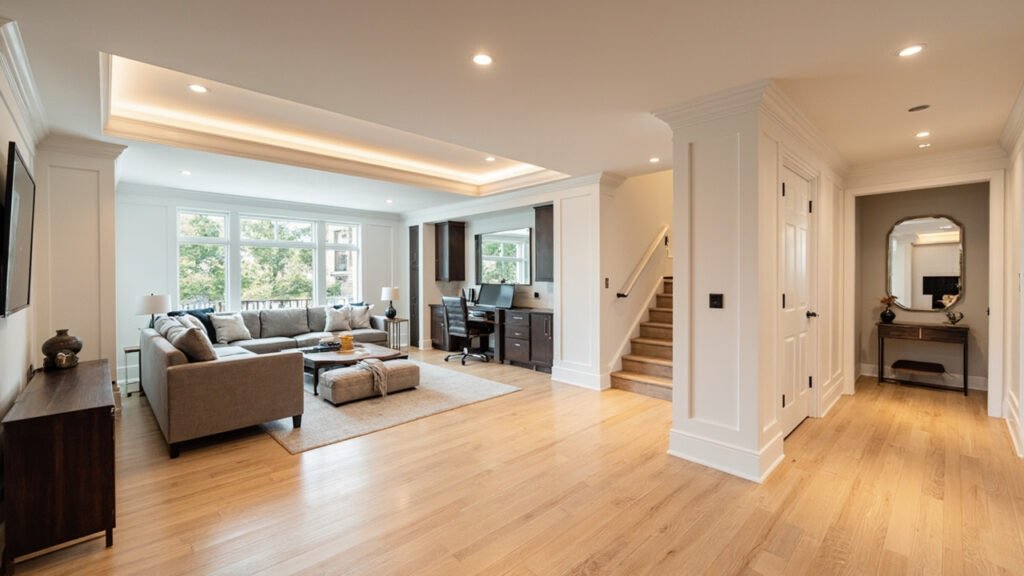
Your basement is one of the most versatile spaces in your Greater Boston home, and converting it into a dedicated home theater is one of the most rewarding remodeling projects you can tackle. At Basement Finishing of Boston, we’ve helped homeowners across Needham, Newton, Lexington, Wellesley, and surrounding communities transform their below-grade spaces into stunning entertainment hubs. If you’ve been dreaming of a place where family movie nights feel like opening night at the cinema, here’s what you need to know about basement home theater installation in Greater Boston.
Why Your Basement Is Perfect for a Home Theater
Basements naturally offer the darkness and sound isolation that serious home theaters demand. Above-grade rooms fight against street noise, daylight, and ambient light from windows. Your basement, tucked below ground, provides built-in acoustic advantages and privacy. For Boston homeowners with older Colonial or Victorian homes in communities like Brookline, Weston, and Westwood, a basement theater can add significant living space without altering your home’s historic character.
Beyond entertainment, a properly finished basement theater adds real value to your home. Today’s Boston buyers increasingly seek flexible living spaces, and a well-designed theater room checks multiple boxes: entertainment, family bonding, and potential guest accommodations.
Planning Your Basement Home Theater: Key Considerations
Before you start tearing out old walls, take time to plan. Several factors are unique to basement installations in Greater Boston properties:
- Ceiling height: Older Boston-area homes often have basement ceilings lower than modern standards. We’ve seen basements with 6-foot ceilings and others with generous 9-foot heights. Your theater layout depends on this measurement. We can discuss options including dropped ceilings, recessed lighting, and optimized speaker placement to work with your specific dimensions.
- Egress requirements: Massachusetts building codes require egress windows or alternative exit options for basement living spaces. This actually works in your favor—a properly sized egress window floods your theater with natural light during daytime setup and provides emergency exit access. We handle egress window installation as part of comprehensive basement finishing projects.
- Structural considerations: Boston’s historic housing stock means some basements have older foundations, beam configurations, and support structures. Our team assesses these elements during initial consultations to ensure your theater build is structurally sound.
Moisture Management: The Foundation of a Healthy Basement Theater
Moisture is the enemy of any below-grade space, and Boston’s humid summers and cold winters create particular challenges. A theater room with expensive electronics and comfortable seating requires dry conditions year-round. At Basement Finishing of Boston, moisture-aware finishing is built into every project we undertake.
Our approach includes several critical steps:
- Moisture testing and assessment: We evaluate your basement’s current condition before any work begins. This includes checking for existing leaks, measuring humidity levels, and assessing drainage around your foundation.
- Proper insulation and vapor barriers: We install insulation designed for below-grade applications, with continuous vapor barriers that prevent moisture from migrating into your theater space.
- Ventilation and dehumidification planning: Your theater design should include provisions for controlling humidity, especially during humid Massachusetts summers.
- Flooring selection: We recommend moisture-resistant flooring options like luxury vinyl plank (LVP) or tile that can withstand the occasional moisture event while still looking great in a theater setting.
Designing Your Home Theater Layout
Great theater design balances acoustics, sightlines, and comfort. When planning your basement theater, consider these elements:
- Screen and seating placement: Your viewing distance depends on screen size and resolution. We help you optimize seating rows for unobstructed sightlines from every seat.
- Acoustic treatment: Basement theaters benefit from the mass of surrounding earth, but you still need acoustic management. We plan for acoustic panels, strategic wall treatments, and speaker placement that maximizes sound quality.
- Lighting design: Ambient lighting sets the mood before the movie starts. We install dimmable LED systems, pathway lighting, and accent features that make your theater inviting without ruining the viewing experience.
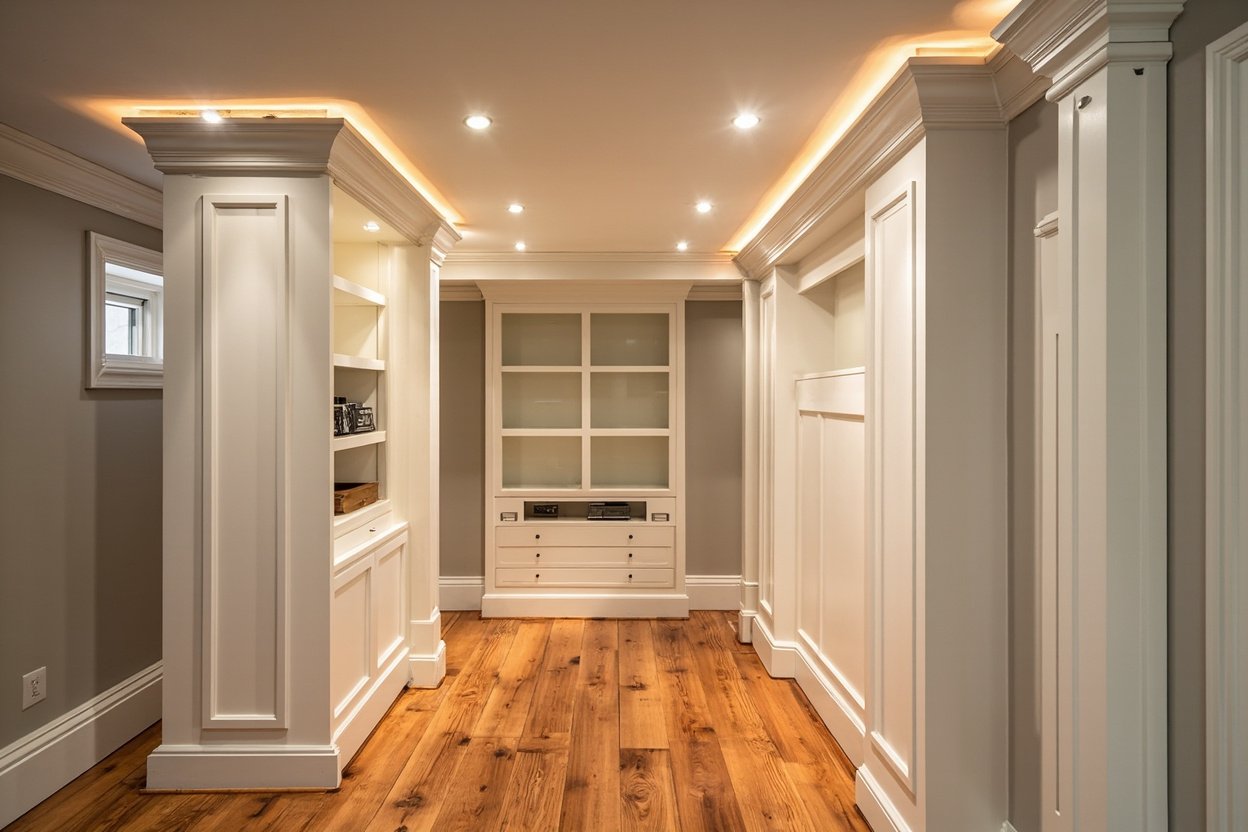
- Equipment storage: Where does your receiver, streaming devices, and gaming consoles live? We plan closet or built-in storage that keeps equipment accessible but hidden from view.
The Basement Theater Construction Process
When you work with Basement Finishing of Boston, you get a clear, professional process from start to finish. Our typical theater build includes:
- Demolition and preparation: Clearing old finishes, addressing any moisture issues, and preparing the space for new construction.
- Framing and structural work: Building walls, soffits for wiring and speakers, and any structural modifications needed.
- Electrical and low-voltage wiring: Our licensed electricians handle outlet placement, dedicated circuits for your equipment, and low-voltage wiring for speakers, network connections, and control systems.
- Insulation and drywall: Professional insulation installation followed by drywall, taping, and finishing. We can incorporate acoustic drywall or special panels if your design calls for them.
- Painting and trim: Dark colors create better viewing environments, while quality trim work gives your theater a polished, professional appearance.
- Flooring and ceiling: Installation of your chosen flooring and ceiling system, including recessed lighting fixtures.
Making It Yours: Custom Theater Features
The best basement home theaters reflect their owners’ personalities and entertainment preferences. Consider these popular add-ons we install for Greater Boston homeowners:
- Wet bars and kitchenettes: Keep drinks and snacks within reach without missing a moment of the action.
- Built-in seating and risers: Custom millwork creates stadium-style seating that maximizes your space.
- Acoustic panels and treatments: Disguised as decorative elements, these improve your sound system dramatically.
- Control system integration: Streamline your experience with universal remotes or voice-controlled lighting, climate, and A/V.
Ready to transform your basement? Visit our basement finishing page or call (857) 666-8643 for a Free, no-obligation estimate
When planning your basement home theater installation, focus on proper scope definition, moisture management, and selecting materials suited for below-grade spaces.